Cannabis POS System for Retail Dispensaries
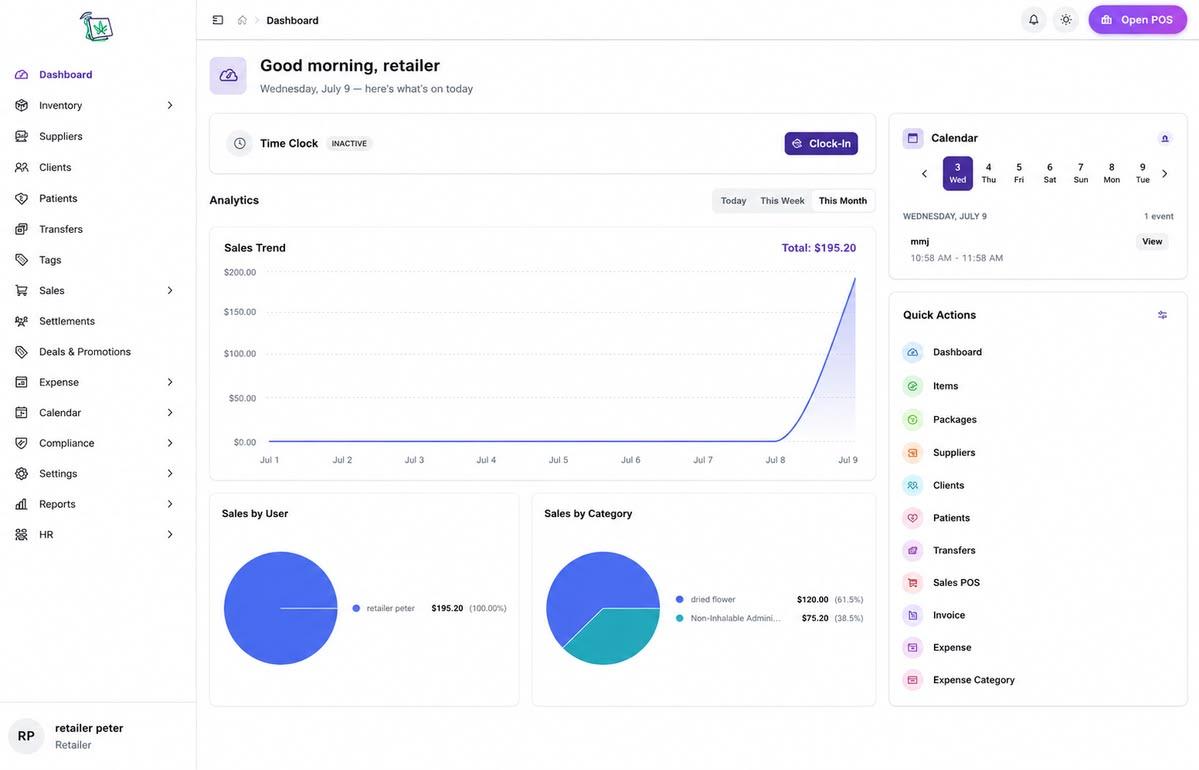
A retail dispensary runs on the same rhythm as any high-volume store — patients in line, products moving, staff juggling questions — but the register sits inside a regulated environment where every sale has a state record and every package has a tag. That is why a generic retail POS breaks down quickly on a dispensary floor. A cannabis POS system for retail dispensaries is built around compliance, package inventory, and checkout speed as one connected workflow, not three separate tools held together by spreadsheets.
For Oklahoma OMMA-licensed operators, the stakes are concrete. Sales must report to the state. Inventory must match package tags. Patient IDs must be validated and purchase limits enforced before a transaction completes. When those steps live outside the register, the back office absorbs the cost — and audit risk grows quietly until an inspection surfaces it.
This guide explains what a cannabis POS system for retail dispensaries should deliver, how it differs from general retail software, and what Oklahoma operators should evaluate before choosing a platform.
Why retail dispensaries need purpose-built POS software
Retail dispensaries look like standard stores from the outside: shelves, registers, staff, and customers. Inside the operation, the workflow is fundamentally different.
Every product on the shelf is tied to a state-tracked package. Every sale may need to connect to a patient profile with purchase limits. Returns, adjustments, transfers, and promotions all have compliance implications that a clothing store or grocery never faces. A cannabis POS system for retail dispensaries accounts for that reality at the register, not in a back-office export at the end of the day.
The cost of using the wrong software shows up in predictable places:
- end-of-day METRC uploads that someone has to remember,
- inventory counts that drift from state records,
- patient ID errors caught only during an audit,
- promotions applied manually because the register does not know the rules,
- managers rebuilding reports from multiple systems every week.
Purpose-built cannabis retail software removes those friction points by making compliance part of the sale itself.
Core capabilities every cannabis retail POS must include
Not every feature on a vendor checklist matters equally. For a retail dispensary, these capabilities form the baseline.
State compliance at the point of sale
Compliance cannot be a separate step after checkout. A cannabis POS for retail dispensaries should record sales with the state automatically, support package-level tagging from intake through sale, and build transfer manifests from the same inventory data the counter uses.
In Oklahoma, that means METRC compliance is native to the register — not a nightly upload or a third-party bridge. When a budtender rings up a sale, the state record should already exist.
Package-level inventory control
Retail dispensaries do not track inventory in broad categories alone. They track packages — each with a tag, batch, weight, and compliance history. A cannabis POS system must reflect that model on the floor.
Strong inventory control includes intake workflows, split and combine handling, low-stock alerts, and discrepancy tracking tied to operator actions. When inventory lives at the package level, reordering, cycle counts, and audit prep all pull from the same source of truth.
Patient ID checks and purchase limits
Oklahoma retail dispensaries must validate patient ID formats and enforce purchase limits in real time. That work belongs at checkout, not in a manager's notebook.
A cannabis POS should calculate allowed purchase envelopes as items scan, block non-compliant sales before they complete, and record the validation in the audit trail. Our guide on how Oklahoma dispensaries keep patient data and purchase limits accurate walks through what that looks like on a busy shift.
Fast, learnable checkout
Compliance features only work if budtenders actually use them. A cannabis POS system for retail dispensaries must be fast enough for peak hours and simple enough to learn in one shift.
That means intuitive product search, barcode and tag scanning, multi-tender payments, compliant returns and refunds, and Point of Sale workflows that do not require workarounds when the line is long.
Generic retail POS vs cannabis POS for retail dispensaries
The gap between general retail software and a cannabis-native platform is where most dispensaries discover hidden labor costs. This comparison shows why the distinction matters for daily operations.
| Capability | Generic retail POS | Cannabis POS for retail dispensaries |
|---|---|---|
| State sales reporting | Manual export or not supported | Automatic reporting at checkout |
| Inventory model | SKU or category counts | Package-level tracking with tag history |
| Patient ID validation | Not supported | Format checks at the register |
| Purchase limits | Not supported | Real-time enforcement during the sale |
| Transfer manifests | Not supported | Built from the same inventory system |
| Promotions | Generic discount codes | Compliance-aware rules tied to patient and inventory |
| Audit trail | Basic transaction log | Operator, reason code, and state-sync history |
| Offline operation | Often limited | Queued sales with timestamped state sync |
The right-hand column describes what Oklahoma retail operators need — not optional upgrades, but the minimum for running a compliant store without a parallel spreadsheet system.
How compliance, inventory, and checkout connect on the floor
The strongest cannabis POS systems for retail dispensaries treat compliance, inventory, and checkout as one loop rather than three departments.
When a package arrives, intake captures tag, batch, and lab data. That package appears in inventory immediately. When a budtender scans it at the register, the sale deducts from the correct package, reports to the state, and updates any connected listing or loyalty balance in the same transaction. If a manager adjusts inventory, the system records who made the change, why, and what the prior value was.
That connected loop is what keeps a retail dispensary audit-ready without a weekly reconciliation project. Compliance documentation — license records, lab certificates, inspection history — sits alongside the operational data instead of in a separate folder someone has to hunt for.
Operators who still run manual METRC workflows often underestimate the hours involved. If that sounds familiar, our post on automated METRC reporting for Oklahoma dispensaries breaks down where the time goes and what automation changes.
Operations beyond the register
A cannabis POS system for retail dispensaries is not only a checkout tool. Modern operators expect the platform to support the rest of the business too.
Reporting and reconciliation. Finance teams need sales, tax, cash, and compliance data in formats they can actually use. Integrated reports should export to CSV, JSON, or PDF without rebuilding numbers from multiple systems.
Loyalty and promotions. Repeat patients drive retail dispensary revenue. When loyalty and promotion rules live inside the POS, rewards earn and redeem at checkout without a separate marketing import — and every discounted sale stays in the compliance record.
Cash and staff management. Shift-level cash reconciliation, role-based access, and expense tracking reduce end-of-day surprises. These operational layers matter as much as checkout speed once a dispensary scales past a single register.
Implementation speed. Switching POS systems is a business decision, not just a software purchase. Platforms built for Oklahoma cannabis retail — with inventory import, OMMA credential setup, and staff training included — typically go live in about two days rather than weeks of custom configuration. That is the implementation model Weed POS follows for Oklahoma retail dispensaries.
Evaluating vendors: questions Oklahoma retail operators should ask
Before signing a contract, run every vendor through the same workflow tests your team performs daily.
Ask to see:
- a full checkout with patient ID format check and purchase-limit enforcement,
- a package intake, split, and sale sequence with state sync,
- a transfer manifest built from live inventory,
- a return or refund that stays compliant,
- reporting exported for an accountant or OMMA audit,
- offline mode during a simulated internet outage.
Compare answers against your current pain points. If the vendor relies on manual exports, spreadsheet reconciliation, or "we can configure that later," the total cost of ownership will include labor your team already does not have.
Our dispensary POS selection guide for Oklahoma provides a structured rubric for scoring vendors on compliance, operations, and support — useful whether you are opening a new retail location or replacing a legacy register.
Why Oklahoma retail dispensaries are moving to modern cannabis POS platforms
Oklahoma's retail cannabis market matured quickly. Early dispensaries often started on whatever register was available. As OMMA expectations tightened and store volume grew, the gap between generic tools and cannabis-native software became impossible to ignore.
Operators switching today typically share the same triggers:
- manual METRC reporting consuming hours every week,
- inventory mismatches discovered only during counts or inspections,
- patient ID issues found after the fact,
- loyalty and promotions running in a separate system that does not talk to inventory,
- managers rebuilding reports from three different exports.
Modern cannabis POS platforms address those problems by design. For a broader view of what is driving those switches, see why Oklahoma dispensaries are moving to modern cannabis POS systems.
Weed POS was built for exactly this retail environment — Oklahoma OMMA from day one, with automatic state reporting, package-level inventory, patient ID format checks, and checkout workflows budtenders learn in a single shift. It is not a generic register retrofitted with cannabis modules; the compliance loop is the product.
What to expect during implementation
Implementation should feel like onboarding a new operating system, not installing a plugin.
A typical rollout for a retail dispensary includes:
- importing existing inventory package by package so state records stay matched,
- connecting OMMA and METRC credentials,
- configuring registers, roles, and payment methods,
- training budtenders on checkout, returns, and patient workflows,
- validating the first day of live sales against state records.
The goal is a first shift where compliance happens automatically and the team spends energy on patients, not on figuring out where the upload button went.
Review pricing alongside your current software spend — subscription fees are only part of the picture when manual reconciliation and audit risk carry their own cost.
Conclusion: the register is the center of retail dispensary operations
A cannabis POS system for retail dispensaries is the operational backbone of the store. It is where compliance meets inventory, where patient rules meet checkout speed, and where the data your accountant and the state both need is created in the first place.
Generic retail software can ring up a sale. It cannot run a regulated cannabis retail operation without adding labor, risk, and workarounds at every step. Oklahoma operators who choose a cannabis-native platform gain time back, reduce audit exposure, and give their teams a register that works the way the business actually runs.
If you are evaluating options for your retail dispensary, book a demo with Weed POS and walk through a live checkout, package sale, and METRC sync with your team — that single session usually clarifies more than any feature checklist.
Frequently asked questions
What makes a cannabis POS different from a regular retail POS?
A cannabis POS for retail dispensaries records every sale with the state compliance system, tracks inventory at the package level, enforces patient purchase limits, and validates patient ID formats at checkout. A generic retail register does none of that, which forces dispensaries into manual reporting and spreadsheet reconciliation.
Do Oklahoma retail dispensaries need a cannabis-specific POS?
Yes. Oklahoma OMMA requires package-level tracking, timely METRC reporting, patient ID format checks, and purchase-limit enforcement at the register. Software built for general retail cannot support those workflows natively without workarounds that create audit risk.
How long does it take to implement a cannabis POS at a retail dispensary?
With a platform built for Oklahoma cannabis retail, implementation typically takes about two days — including inventory import, OMMA credential setup, and staff onboarding. Budtenders are usually productive on the new register within a single shift.
Can a cannabis POS work when the internet goes down?
An offline-capable cannabis POS lets sales continue locally during outages, queues transactions with original timestamps, and syncs them to the state automatically when the connection returns. That keeps the counter open without creating gaps in compliance records.
What should I look for when evaluating a cannabis POS for my retail dispensary?
Prioritize automatic OMMA sales reporting, package-level inventory, patient ID format checks with purchase-limit enforcement, offline mode, integrated reporting, and Oklahoma-specific support. Run a pilot on your busiest workflows before committing.
Book a Weed POS Demo
See how Weed POS handles OMMA compliance, inventory, and checkout for Oklahoma dispensaries, all in one operating system.
Related articles
Point of SaleJuly 8, 2026
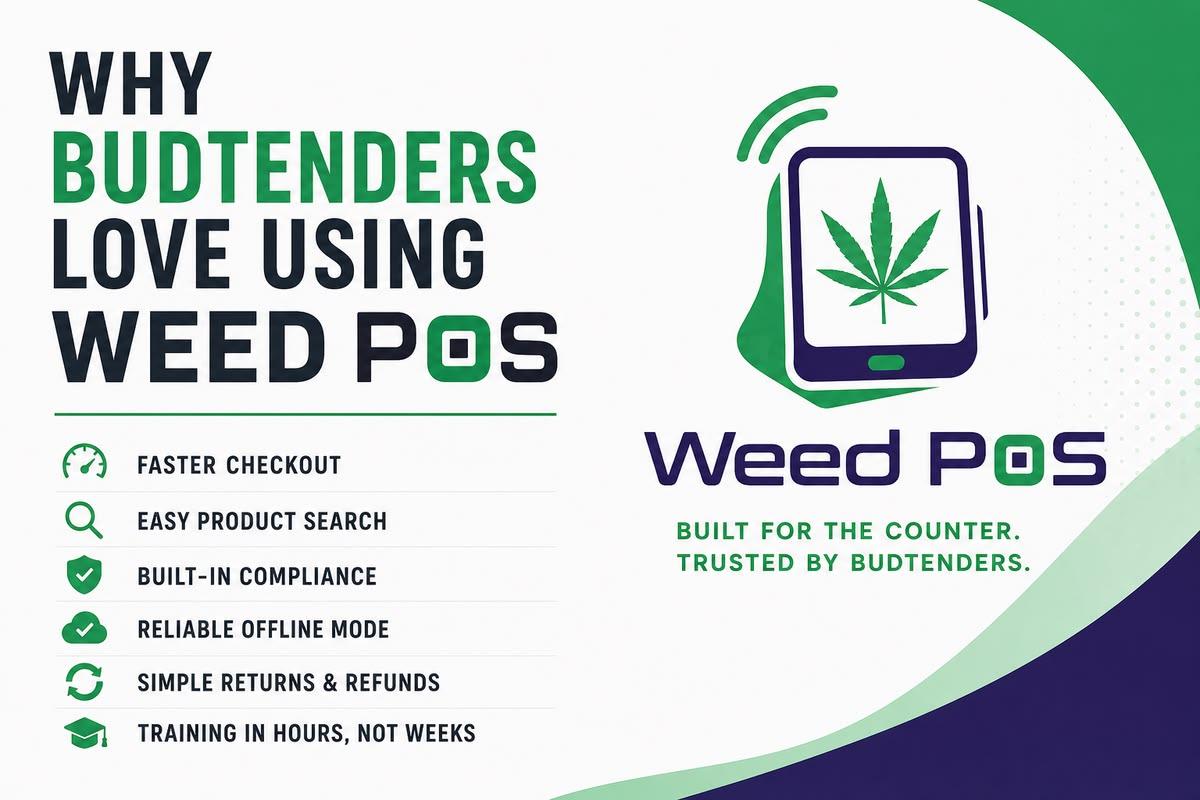
Why Budtenders Love Using Weed POS
Budtenders need a cannabis POS that keeps checkout fast, compliance automatic, and product search simple — here is why Oklahoma teams prefer Weed POS on busy shifts.
Point of SaleJune 19, 2026
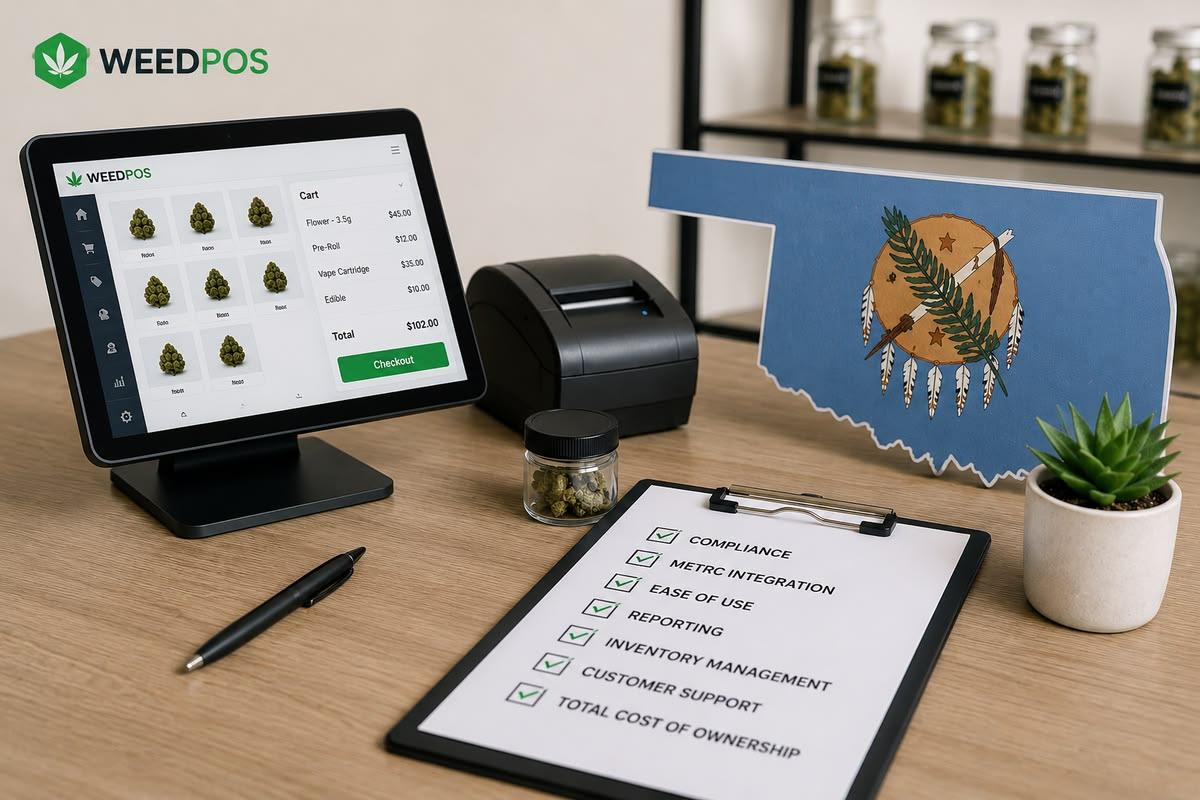
How to Choose a Dispensary POS System in Oklahoma
Step-by-step criteria for selecting the right dispensary POS in Oklahoma, balancing compliance, cost, and operations.
Point of SaleJune 18, 2026
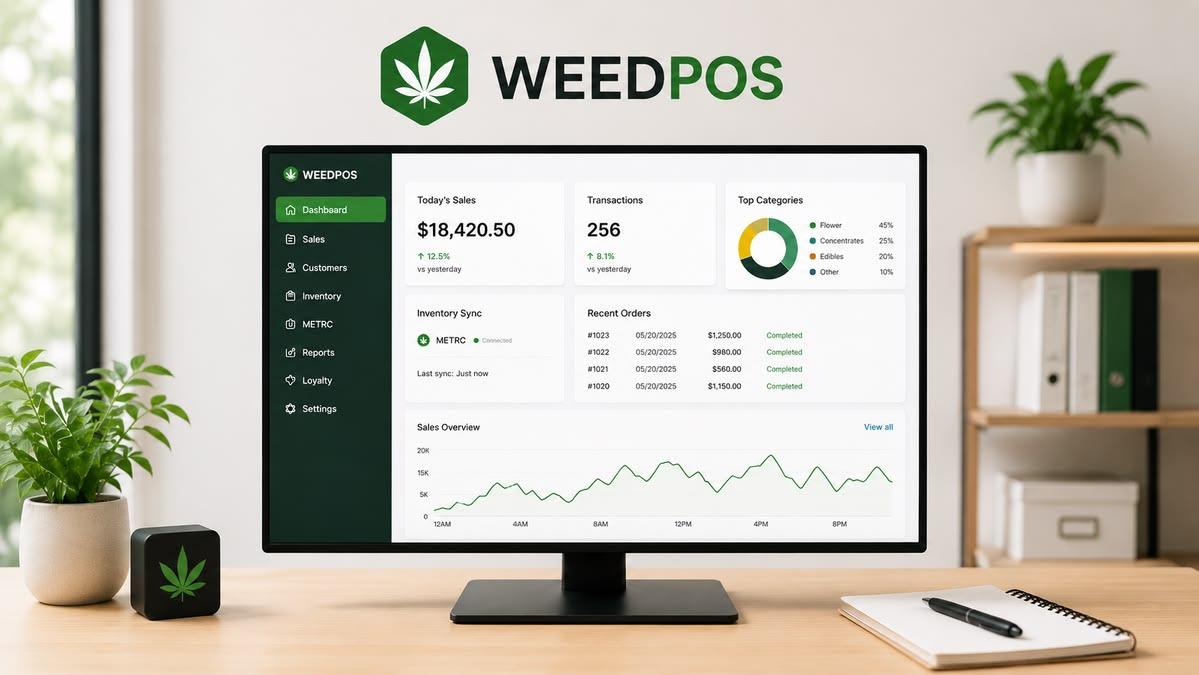
Weed POS vs Dutchie: Oklahoma Dispensary POS Comparison
A feature-by-feature POS software comparison of Weed POS and Dutchie for Oklahoma dispensary operators evaluating OMMA compliance and operations.