Why Oklahoma Dispensaries Need Automated METRC Reporting
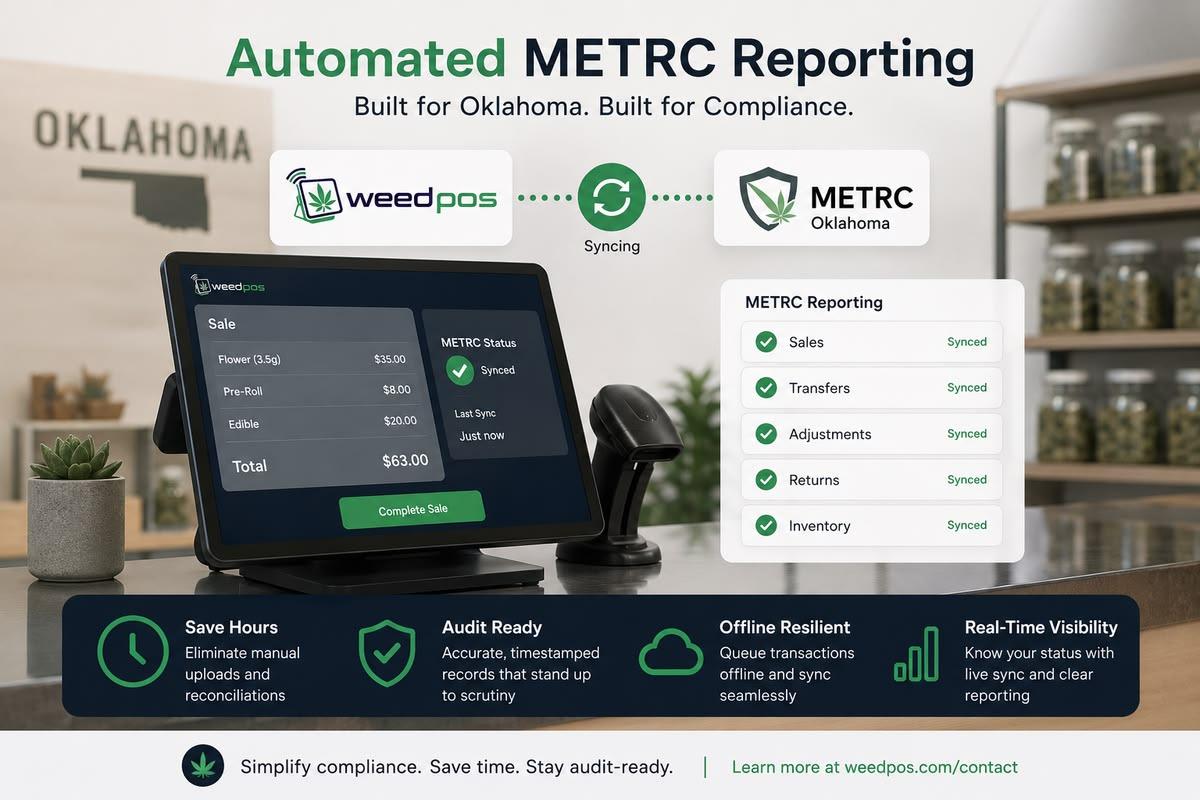
Manual METRC reporting is one of the biggest time taxes in Oklahoma cannabis retail. Automating that workflow frees your team to focus on customers instead of spreadsheets, while also reducing audit risk and reconciliation pain.
The time tax of manual METRC work
For many dispensaries, manual METRC work adds hours to every week.
Tasks that consume time include:
- exporting sales and transfer activity from the POS,
- formatting CSVs or uploads to meet METRC requirements,
- reviewing rejected manifests and correcting errors,
- manually reconciling state records with physical inventory,
- troubleshooting missing or mismatched package tags.
That work happens after the shift, and it often creates a second shift for managers. Automated reporting turns those hours into a routine background process.
How automated workflows help
Automated METRC reporting takes a lot of work off your team’s plate.
A strong automation workflow will:
- send sales and transfer updates directly to the state system,
- create and submit manifests automatically,
- update package statuses in real time,
- flag errors early so they can be corrected before they multiply,
- maintain an audit trail without manual data entry.
With automation, your POS becomes the source of truth. That means fewer manual handoffs, fewer transcription mistakes, and a cleaner path from the register to the state record.
Offline resilience and safe syncing
Oklahoma dispensaries cannot depend on perfect connectivity.
The right automated reporting system supports offline mode by:
- queueing transactions locally when the connection drops,
- preserving original transaction timestamps,
- syncing cleanly after reconnecting,
- reconciling queued activity with METRC without duplicate submissions.
Offline resilience makes automation safe. It keeps the store moving while preserving the integrity of your reporting.
Audit readiness and reconciliation
Automated METRC reporting improves audit readiness in two ways.
First, it creates a more complete and consistent record of activity. When transfers, sales, and adjustments flow through the same system, the audit trail is easier to follow.
Second, it reduces the number of manual adjustments and exception reports. That means fewer surprises when you open an audit or inspection file.
Checking your records against METRC becomes a validation exercise instead of a crisis response.
What to look for in an automated METRC solution
Not all automation is created equal.
Choose a solution that offers:
- native METRC integration,
- automatic manifest generation and submission,
- real-time inventory and package tag updates,
- offline queueing and safe recovery,
- clear exception alerts and reconciliation tools.
The best systems do more than save time. They make compliance a predictable, repeatable process.
Why this matters for Oklahoma dispensaries
Oklahoma operators face a compliance environment where speed and accuracy matter.
Automated reporting helps you avoid the common trap of treating METRC as a separate task. When your POS and state reporting work together, the store can operate without forcing managers into late-night data cleanup.
Next steps for your store
If manual METRC reporting is still part of your daily routine, it is time to automate.
A better workflow can reclaim hours per week, reduce risk, and make audits less stressful. To see how automated METRC reporting works in practice, contact our team.
For more on state reporting and compliance workflows, read our guide to METRC compliance made simple.
Frequently asked questions
How much time can automated reporting save?
Operators reclaim several hours per week per location by removing manual uploads and reconciliations.
Is automated reporting safe during outages?
Yes—offline queueing preserves original timestamps and syncs cleanly when online.
Book a Weed POS Demo
See how Weed POS handles OMMA compliance, inventory, and checkout for Oklahoma dispensaries, all in one operating system.
Related articles

ComplianceJuly 16, 2026
Why Oklahoma Dispensaries Need a POS Built Specifically for OMMA
Multi-state cannabis POS platforms spread compliance thin. Oklahoma dispensaries need software built for OMMA workflows — METRC, patient limits, and package inventory from day one.

ComplianceJuly 6, 2026
What Is OMMA Compliance and Why Your POS Matters
OMMA compliance is the operating standard for Oklahoma medical dispensaries — and your POS is where package tracking, patient rules, and METRC reporting actually happen.
ComplianceJune 17, 2026
OMMA Compliance Checklist for 2026
A concise, actionable OMMA compliance checklist for Oklahoma dispensaries in 2026.