Weed POS vs Dutchie: Oklahoma Dispensary POS Comparison
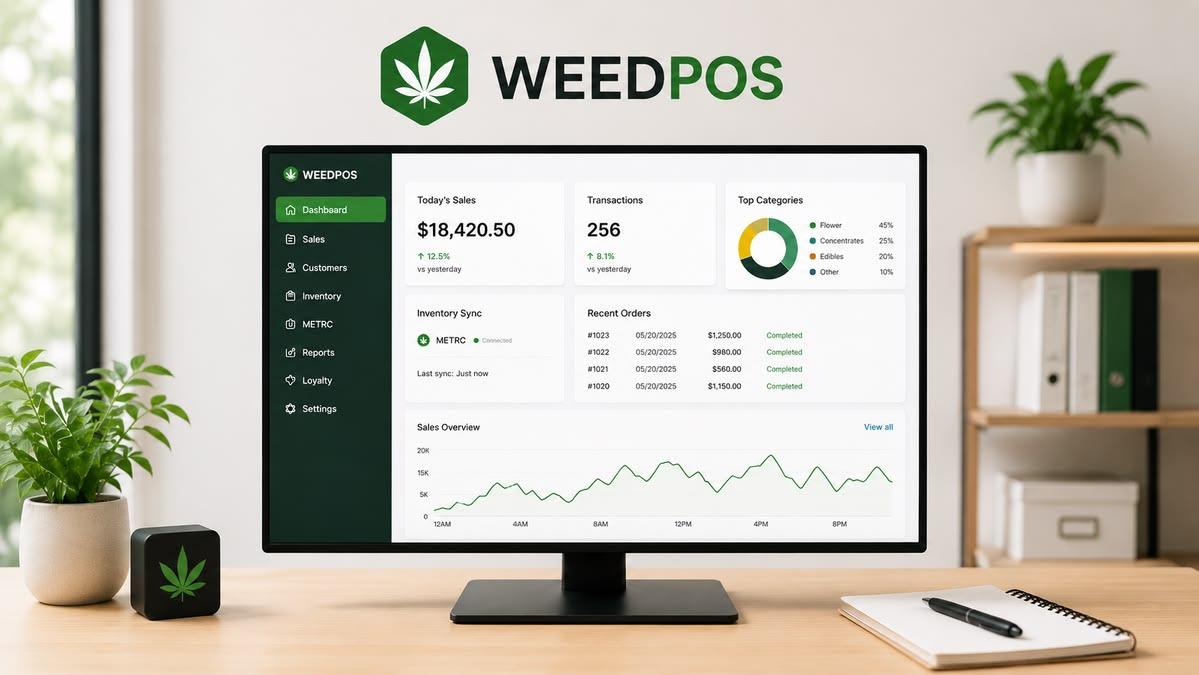
Choosing the right dispensary POS software is about operational fit, not popularity. This comparison looks at Weed POS and Dutchie through the lens of Oklahoma dispensary operators: compliance, inventory control, loyalty software, and support.
Vendor overview and target markets
Weed POS is built around dispensary operations and compliance workflows that matter in regulated markets. It emphasizes package-level tracking, METRC integration, and a checkout experience tailored for busy budtenders.
Dutchie is known for its online ordering and marketplace presence. It often serves retailers looking to combine e-commerce, pickup, and loyalty capabilities with a broader consumer-facing platform.
For Oklahoma dispensaries, the critical question is whether the system supports OMMA workflows and state reporting in a way that reduces risk while still enabling modern sales channels.
Compliance capabilities comparison
Compliance should be the first filter for any Oklahoma POS.
Weed POS typically focuses on:
- package-level inventory tracking,
- real-time METRC sync,
- patient and purchase limit controls,
- audit-ready adjustment documentation.
Dutchie’s strengths are often in online order management, but dispensaries should confirm:
- whether it supports native METRC reporting or relies on third-party connectors,
- how it handles package tag reconciliation from online orders to physical inventory,
- whether it enforces Oklahoma-specific purchase rules at the register.
The safest choice for Oklahoma is a system that treats state reporting and package tracking as native workflows rather than optional add-ons.
Inventory and package tracking differences
Inventory control is where compliance and operations meet.
Weed POS is designed to keep package tags central to the workflow. It tracks packages from receiving through sale, supports lab certificate attachment, and helps reconcile physical inventory with sales records.
Dutchie can provide strong online menu visibility, but dispensaries should validate how well it manages package-level changes behind the scenes. Key questions include:
- does it update inventory immediately after sale?
- can it handle splits, combines, and transfers without introducing mismatches?
- how does it surface inventory exceptions?
If your store depends on package-level accuracy, choose the platform that makes tag reconciliation and state reporting straightforward.
Loyalty, promotions, and marketing features
Loyalty and marketing are important, but they should not come at the expense of compliance.
Weed POS supports loyalty and promotions within the context of dispensary operations. That means the register can apply rewards, track redemptions, and maintain inventory accuracy.
Dutchie is often strong in online deals, pickup, and marketplace exposure. It may be a better fit for stores that prioritize a consumer-facing ordering experience, provided the back-end inventory and compliance integration is solid.
For many operators, the ideal setup is a system that can do both: support loyalty and offers while keeping inventory and state reporting aligned.
Pricing and support considerations
Price is only part of the decision. Support and onboarding matter more in regulated markets.
When comparing vendors, consider:
- whether the system includes Oklahoma-specific onboarding,
- how responsive the support team is for compliance questions,
- the cost of implementation and training,
- the availability of local or state-aware support.
A lower monthly fee can be costly if the solution requires frequent manual work or outside consultants to keep METRC and records aligned.
Making the comparison practical
Rather than choosing based on brand, test both systems against your core workflows.
Your evaluation should include:
- a demo of checkout, inventory, and compliance workflows,
- a review of METRC sync and how package tags are managed,
- a look at how loyalty and promotions are executed,
- a discussion of support, training, and onboarding.
The most useful comparisons come from pilots that mirror your store’s real operations, not from feature lists alone.
Which platform fits Oklahoma dispensary operators?
If you prioritize compliance, package accuracy, and a state-aware workflow, the best choice is the system that makes those requirements easy to execute every day.
If you need strong online ordering and marketplace visibility, that is an important consideration — but it should be balanced against how well the platform handles Oklahoma-specific reporting and inventory control.
Next step: evaluate with your workflows
To choose the best cannabis POS, focus on the workflows that matter most for your dispensary: compliance, inventory accuracy, sales, and customer retention.
If you want help comparing vendor fit and building a pilot that tests METRC, loyalty, and checkout performance, contact our team. We can help you compare both systems based on your business needs, not just marketing claims.
For deeper loyalty and state reporting guidance, explore our loyalty features and METRC resources.
Frequently asked questions
Which system is better for OMMA compliance?
Choose the system that offers package-level tracking, real-time state reporting, and offline resilience for Oklahoma.
How should I compare vendor claims?
Test core workflows: checkout, METRC sync, manifest creation, and reporting during a pilot.
Book a Weed POS Demo
See how Weed POS handles OMMA compliance, inventory, and checkout for Oklahoma dispensaries, all in one operating system.
Related articles
Point of SaleJuly 21, 2026
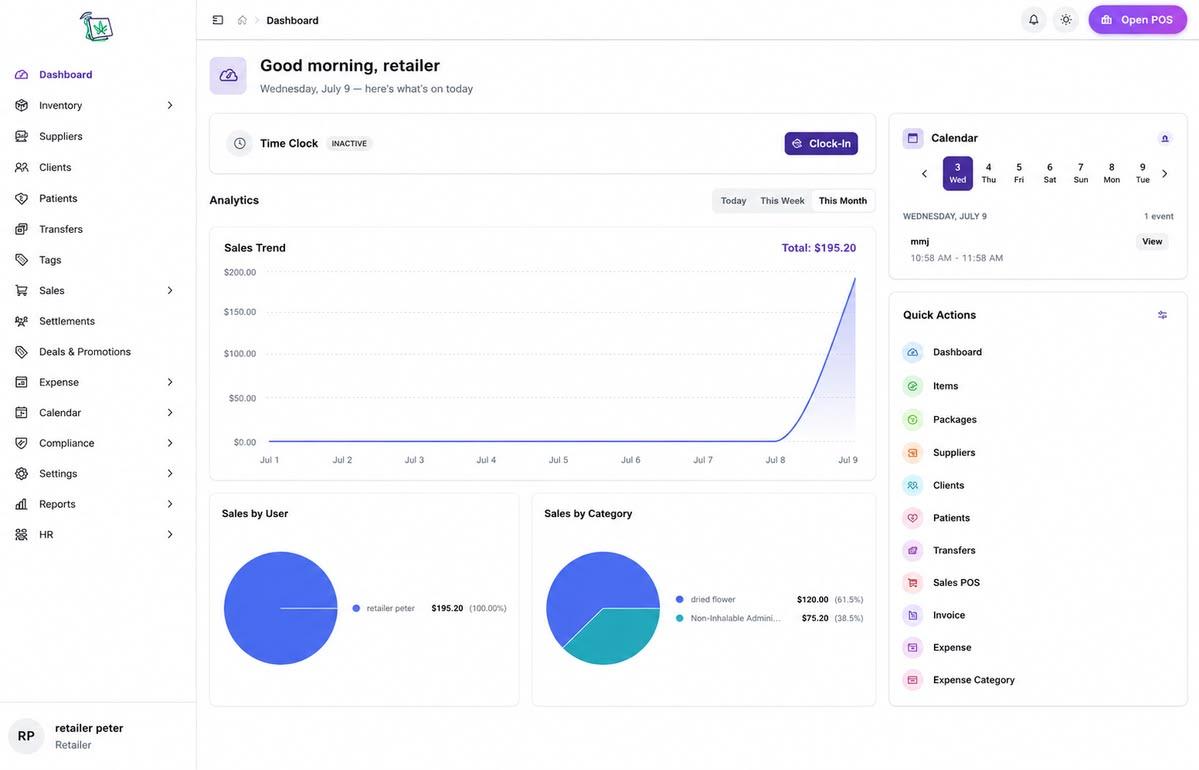
Cannabis POS System for Retail Dispensaries
A cannabis POS system for retail dispensaries must handle OMMA compliance, package inventory, and fast checkout in one workflow — not as bolt-on modules.
Point of SaleJuly 8, 2026
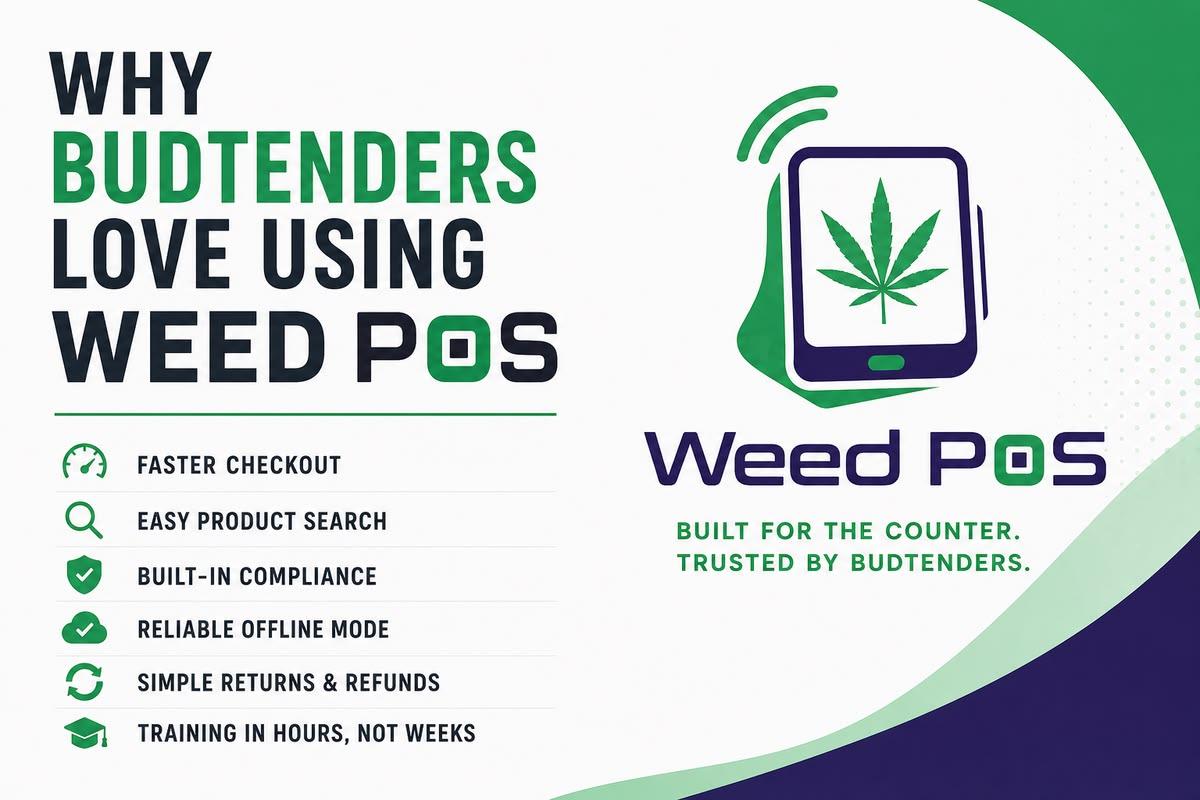
Why Budtenders Love Using Weed POS
Budtenders need a cannabis POS that keeps checkout fast, compliance automatic, and product search simple — here is why Oklahoma teams prefer Weed POS on busy shifts.
Point of SaleJune 19, 2026
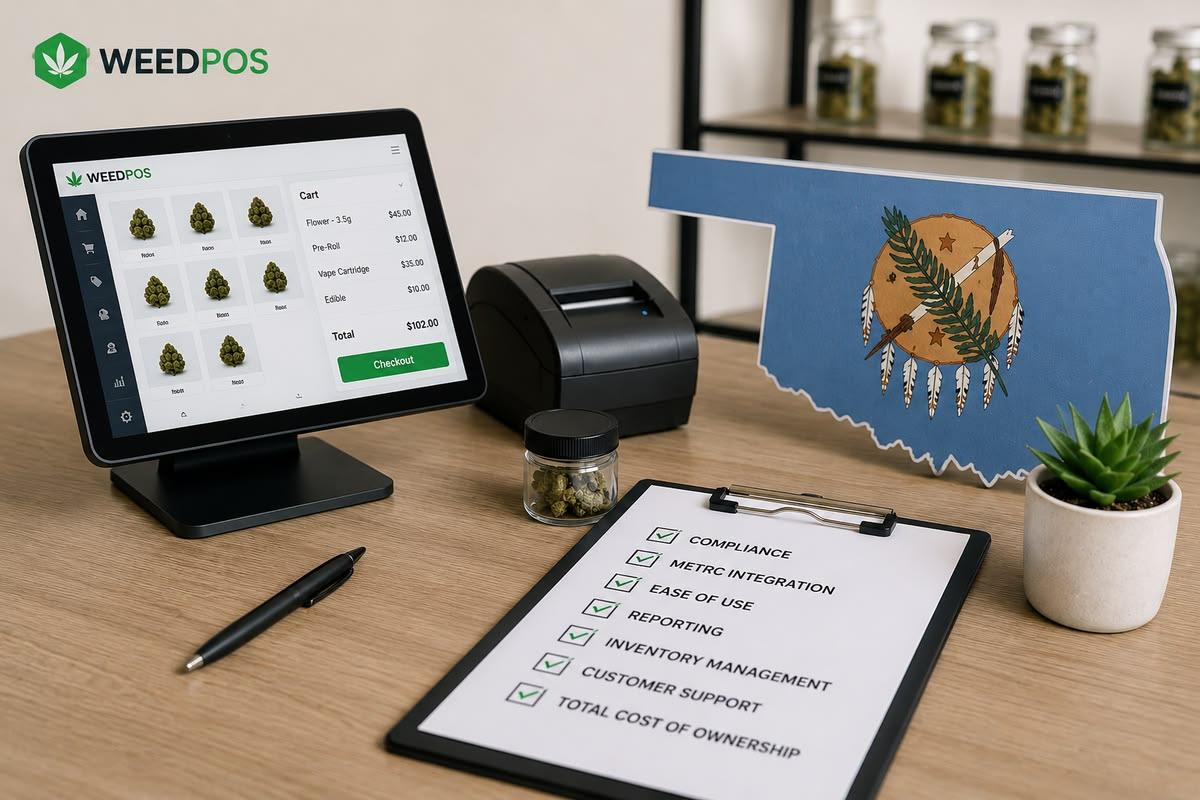
How to Choose a Dispensary POS System in Oklahoma
Step-by-step criteria for selecting the right dispensary POS in Oklahoma, balancing compliance, cost, and operations.