OMMA Compliance Checklist for 2026
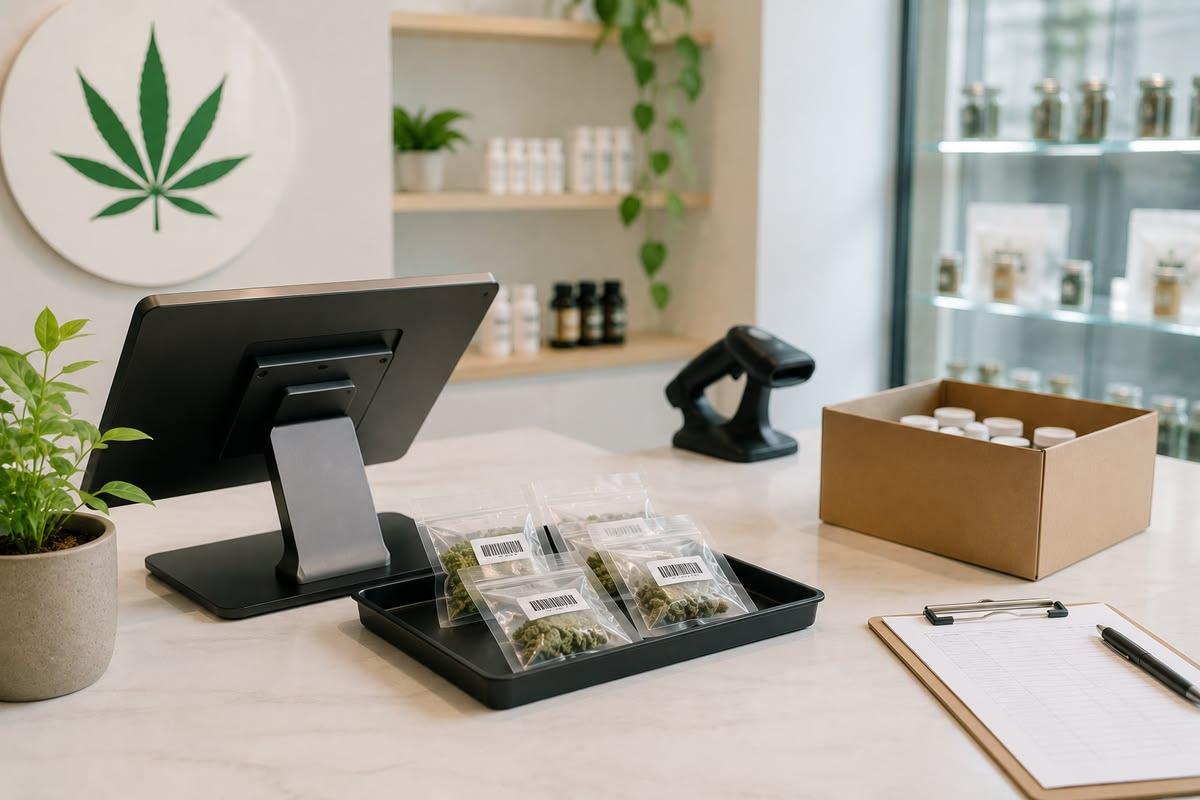
Staying audit-ready in 2026 means making OMMA compliance an everyday part of your dispensary workflow. This checklist is designed to help Oklahoma operators keep METRC, package tracking, transfers, and staff training aligned without guesswork.
Daily compliance actions
Every shift should begin and end with checks that protect your store and your license.
Daily tasks:
- verify that all received packages are entered in the system with accurate tags and lab certificates,
- confirm POS sales, package movements, and transfers are matched to inventory records,
- review sales batches for flagged exceptions or suspicious voids,
- reconcile cash and register totals at shift close,
- ensure any adjustments are documented with clear reason codes.
A healthy daily process catches errors when they are small. The longer a discrepancy sits, the harder it becomes to trace and fix.
Weekly compliance actions
Weekly routines build consistency and help catch trends before they become problems.
Weekly tasks:
- run a full package inventory reconciliation against your POS and METRC records,
- review transfer manifests and confirm receipts for all incoming and outgoing shipments,
- audit adjustments and reason-code usage to make sure they are consistent and justified,
- check that reserved or held packages are properly logged and not left in an ambiguous status,
- review employee access logs and manager approvals for overrides, discounts, and voids.
Weekly checks provide a structured way to verify that daily compliance practices are working and that your records remain aligned.
Monthly compliance actions
Monthly reviews should focus on process improvements and compliance readiness.
Monthly tasks:
- audit your METRC activity for open or pending packages,
- verify that all sales and adjustments for the month have been reported and reconciled,
- review training logs and confirm that staff updates and policy changes have been completed,
- examine exception reports for patterns that may indicate process gaps,
- prepare a compliance summary for leadership or owners.
A strong monthly review turns routine data into actionable insights. It is the time to fix systemic issues and refresh team expectations.
METRC sync and offline checks
METRC is the backbone of Oklahoma compliance. Your system should keep it in sync without creating extra work.
Key practices:
- use a POS or inventory system that updates METRC automatically when packages move,
- verify that transfer manifests are generated correctly and accepted by the state system,
- check for METRC exceptions or rejections daily,
- ensure offline mode is available and that queued transactions sync cleanly when connectivity returns.
Offline support is not optional. If the network drops, your staff still needs a controlled way to continue sales and reconcile state reporting afterward.
Package tagging and lab certificate intake
Package-level accuracy begins at receiving.
Intake best practices:
- scan package tags on arrival and verify them against the manifest,
- attach the correct lab certificate and record the test batch information,
- validate weight, product type, and package status before moving inventory to sellable stock,
- use structured fields for tag, batch, and strain data instead of free-form notes.
A package issued with the wrong tag or missing certificate creates a compliance gap that can follow the item through the entire store.
Transfer and manifest best practices
Transfers are one of the riskiest compliance activities. Treat every movement as a controlled document.
Transfer checklist:
- confirm the receiving location before initiating a manifest,
- scan or enter package tags accurately on both ends,
- attach supporting documentation for transfers and returns,
- track transfer status until the receiving location confirms delivery,
- document any rejected or damaged packages immediately.
Well-managed transfers reduce the chance that packages disappear between facilities or get reported incorrectly to the state.
Training and documentation tips
Compliance works best when your team understands the why behind the rules.
Training best practices:
- provide regular OMMA refreshers and METRC process training,
- document your standard operating procedures for receiving, selling, transferring, and adjusting packages,
- review exceptions and audit findings with the team,
- assign clear ownership for daily and weekly compliance tasks,
- keep a compliance binder or digital reference that is easy for staff to access.
A trained team is less likely to create avoidable mistakes and more likely to catch issues before they become audit findings.
Practical checklist for 2026
Use this checklist to stay on track:
- daily: verify package tags, reconcile registers, document adjustments,
- weekly: reconcile inventory and METRC, audit transfers, review approvals,
- monthly: audit open packages, refresh training, review compliance trends,
- always: keep METRC in sync, support offline mode, attach lab certificates,
- routinely: document process steps, train staff, and review exceptions.
If your current compliance process still feels reactive, it is time to build a more systematic workflow. Contact our team for help aligning your OMMA compliance operations, METRC sync, and inventory controls in 2026.
For more on state reporting and compliance workflows, explore our METRC guidance and compliance tools.
Frequently asked questions
What are the top OMMA compliance items for 2026?
Package-level tracking, timely sales reporting, accurate manifests, and documented adjustments are critical.
How often should I run reconciliation?
Daily or at least each shift; weekly reconciliation is risky and can accumulate issues.
Book a Weed POS Demo
See how Weed POS handles OMMA compliance, inventory, and checkout for Oklahoma dispensaries, all in one operating system.
Related articles

ComplianceJuly 16, 2026
Why Oklahoma Dispensaries Need a POS Built Specifically for OMMA
Multi-state cannabis POS platforms spread compliance thin. Oklahoma dispensaries need software built for OMMA workflows — METRC, patient limits, and package inventory from day one.

ComplianceJuly 6, 2026
What Is OMMA Compliance and Why Your POS Matters
OMMA compliance is the operating standard for Oklahoma medical dispensaries — and your POS is where package tracking, patient rules, and METRC reporting actually happen.
ComplianceJune 22, 2026
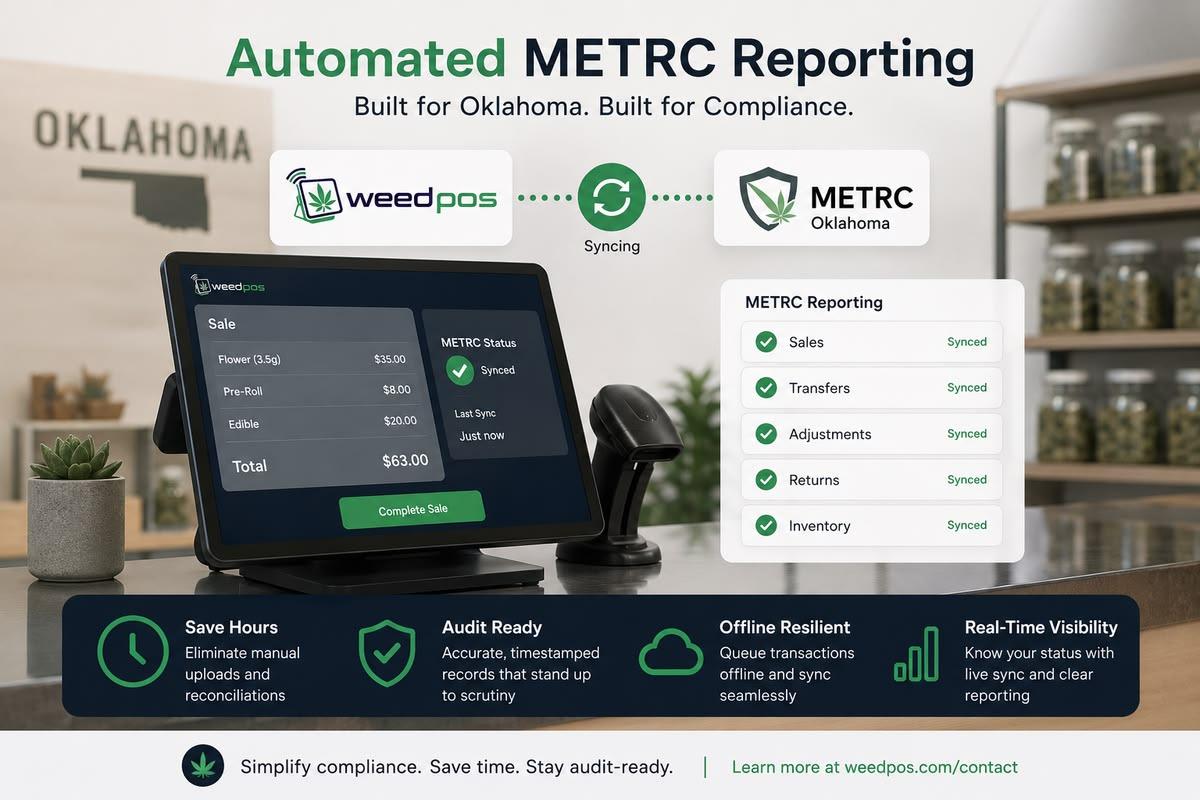
Why Oklahoma Dispensaries Need Automated METRC Reporting
Automated METRC reporting eliminates time taxes and reduces audit risk—here's why Oklahoma stores need it.