Why Operations-Grade HR, Cash, and Reports Win for Oklahoma POS
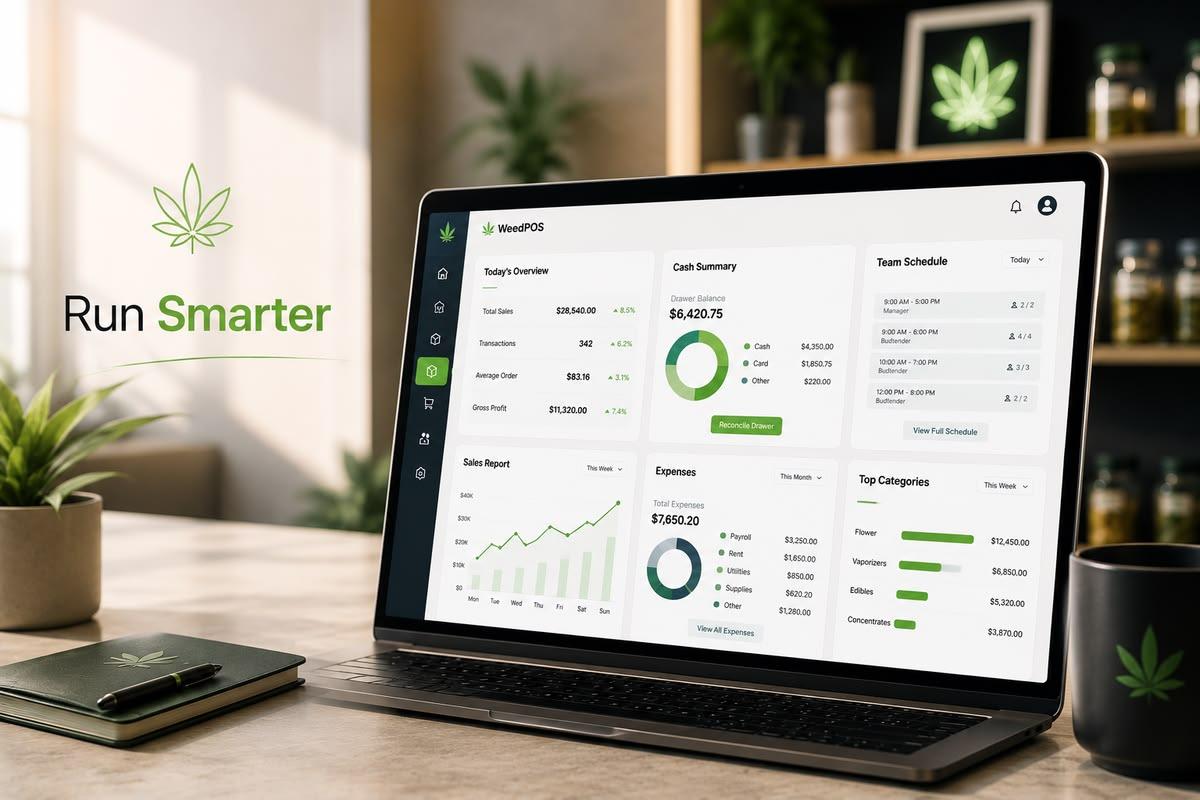
A dispensary is only as healthy as its operations.
Customers can love the bud, but if your cash drawer is unpredictable, staff schedules are a mess, or your back office depends on spreadsheets, the business is still fragile. That is why the feature set behind the register matters almost as much as the register itself.
For Oklahoma dispensaries, the biggest operational wins come from systems that connect cash, HR, expenses, and reporting in one place. Those are the features that let managers stop chasing problems and start making the store run smoothly.
This post explains why operations-grade HR, cash management, and reporting are essential for Oklahoma cannabis POS, how they improve daily life at the store, and why Weed POS is gaining ground by prioritizing the back office.
The hidden cost of a register-only POS
A generic point of sale can enter a sale, take a payment, and print a receipt. That is useful, but it is not enough.
A real dispensary needs more than a register screen. It needs a way to know how much cash should be in the drawer at the end of the day. It needs a way to schedule staff, track who is on shift, and make sure training and certifications are not overdue. It needs to capture every expense, from waste disposal to vendor deliveries, so profitability is not a guess.
The problem is that many systems still treat those needs as add-ons. Operators end up with one app for the register, one spreadsheet for payroll, one notebook for expenses, and a separate reporting dashboard for weekly totals. That is a recipe for mistakes.
Weed POS solves that by building operations features directly into the cannabis platform. The moment a sale is logged, the same system can update cash status, inform the shift lead, and feed the reporting dashboard. That is what makes the platform operations-grade.
Feature focus: HR that supports real dispensary work
Staffing is one of the biggest pain points in Oklahoma retail.
Budtenders need to be where customers are. Managers need to know who is trained for compliance checks. Supervisors need to see if a shift needs to be covered because someone called in sick.
That is why HR features matter here.
Weed POS helps with:
- shift planning and scheduling,
- employee time tracking,
- compliance and training reminders,
- staff performance visibility.
When HR lives in the same platform as the POS, a manager can instantly see whether the right team is on the floor for a high-volume weekend. They can check whether a new hire has completed the training that matters for customer service and OMMA compliance. They can also tie labor decisions to sales patterns instead of relying on memory.
That connection is what turns HR from a distraction into an operational advantage. It is not enough to have scheduling software if it does not know the store's peak hours or if it does not sit next to the numbers that matter.
Cash management that closes the day accurately
Cash is still king in many Oklahoma dispensaries.
That means a missing till, a late deposit, or a mismatch between the drawer and the bank can cause more pain than any slow product.
Operations-grade cash management in Weed POS does more than count bills. It gives you a workflow for how cash should move from the register to a secure deposit. It surfaces overages and shortages. It helps the team know when a deposit is due and when a drawer has been balanced.
Generic POS systems often treat cash like an afterthought: just another payment type. Weed POS treats it like what it is in a dispensary—an operational asset that must be tracked and reconciled.
That is essential in Oklahoma. Cash still moves through most shops, and an inaccurate register can lead to shrink, missed deposits, and employee mistrust.
Expense tracking that makes profitability real
Many dispensaries know their revenue. Fewer know their true cost basis.
Expenses are the invisible drain. Delivery fees, security services, office supplies, utility bills, and packaging all add up. If those costs are tracked outside the POS, you are only measuring half the business.
Weed POS ties expenses to operations so you can compare them alongside sales and payroll. That means you can answer questions like:
- Are we selling enough margin to cover our security contract?
- Is our rent eating too much of weekday profit?
- Which shifts are generating enough revenue to justify labor costs?
When expense tracking lives in the same system as the register, it becomes a decision-making tool instead of a bookkeeping chore.
That is what Expenses in Weed POS are designed to do. They let dispensary owners keep a clean operational ledger and see the cost impact of every decision.
Reports that help Oklahoma dispensaries act faster
A report is only useful if it is accurate and if someone uses it.
Operations-grade reporting in Weed POS gives managers a clear picture of:
- sales by hour and by employee,
- cash flow and deposit timing,
- expense categories and trends,
- inventory turns linked to promotions,
- staff productivity and compliance tasks.
Reports are not just for accounting. They are the way a store learns what is working and what is not.
A well-designed reporting suite makes it easy to spot a falling margin before it becomes a monthly problem. It makes it possible to see whether a new deal campaign is moving product or simply discounting margin. It makes it possible to compare performance across locations if you are operating multiple stores.
That is why Reports are a key part of the operations narrative. They turn the back office into an insight engine.
Calendar features keep deadlines from slipping
Operations is also about timing.
Staff certifications, OMMA filings, vendor deliveries, inventory audits, and payroll reminders all have dates attached. If a deadline slips, it can affect compliance and cash flow.
Weed POS helps managers keep those dates in view with Calendar and reminder workflows. That means a compliance renewal does not rely on memory, and a delivery appointment is not lost in a group chat.
The value is practical. A calendar feature helps the team stay ahead of:
- license renewals,
- audit prep,
- schedule changes,
- training deadlines,
- deposit windows.
That sort of discipline is why operators say they can finally run their dispensary with confidence instead of just firefighting.
Comparison: ordinary POS vs operations-grade Weed POS
| Operations need | Ordinary POS / spreadsheet approach | Weed POS operations suite |
|---|---|---|
| Shift planning | External calendar or paper schedule | Built into the dispensary POS with shift visibility |
| Cash reconciliation | Manual count and separate log | Cash tracking tied to sales and deposit workflows |
| Expense tracking | Spreadsheet or another app | Expenses recorded in the same system as revenue |
| Reporting | Partial dashboards or reports after the fact | Unified operational reports with sales, labor, and expense context |
| Compliance deadlines | Notes and reminders outside the POS | Calendar and reminders inside the platform |
This is the difference between a store that survives and one that can scale.
Why Oklahoma dispensaries need more than a register
For many dispensaries, the first POS purchase is about the counter: fast checkout, patient verification, and inventory control. That is important. But the second-generation winners are buying the platform because it solves the day-to-day operational problems that used to require a full-time manager.
Weed POS is winning in Oklahoma because it gives operators a way to manage the whole store in one place. Cash management is visible. HR scheduling is visible. Expenses are visible. Reports are meaningful.
That matters in a market where compliance is constant, staff turnover is real, and margins are tight.
The operational features also support the broader compliance story. When your payroll, cash, and reporting live in the same system as your sales and inventory, it is easier to maintain a clean audit trail. That is why operators who read our guide on Metrc compliance made simple often tell us the best systems are the ones that make operations consistent, not just one feature.
How Weed POS turns operations into a competitive advantage
Weed POS does not just add HR, cash, or reporting as checkboxes. It uses those capabilities to change how the business is managed.
That means a store can:
- make staffing decisions based on actual sales data,
- balance cash more reliably because the POS knows the drawer flow,
- track expenses as a part of store performance,
- act on insights from reports instead of reacting to surprises.
That is the kind of improvement that changes the tone of a business conversation. Instead of asking "Did we make enough today?" managers ask "Where should we allocate labor tomorrow?" and "Which expenses are eating into our next promotion?"
That operational clarity is why Weed POS is taking share away from systems that stop at the register.
What to do next if operations are holding your store back
If your dispensary still depends on a register-only solution, ask yourself these questions:
- Does your POS tell you which shift generated the most cash?
- Can you see whether your expenses are growing faster than your revenue?
- Is your staff schedule tied to actual store performance?
- Can you run the report you need in minutes, not hours?
If the answer is no, the problem is not just technology. It is the way the store is being managed.
Weed POS is built to fix that. If you want to see how a POS can make your back office feel as good as your front counter, book a demo. We will show you how cash workflows, HR scheduling, expense tracking, and reporting all live inside the same platform, and how the system can be tailored to Oklahoma cannabis operations.
If you want to compare the cost to the benefit, start with pricing and we will make sure the solution fits your store size and staffing model.
Conclusion: operations features are the market-winning differentiator
A good cannabis POS can ring a sale. A great one helps a dispensary run.
For Oklahoma stores, that means the system must be operations-grade. It must support HR, cash, expenses, and reporting without forcing managers to patch together multiple tools. It must help the team stay compliant, productive, and profitable.
That is why Weed POS is not just another register. It is the reason operators are choosing a purpose-built platform instead of piecing together a register, a payroll app, and a spreadsheet.
The market is moving toward systems that treat operations as part of the POS experience. If you want the kind of daily clarity that makes your business easier to run, Weed POS is the place to start.
Frequently asked questions
What does operations-grade mean for a cannabis POS?
Operations-grade means the POS does more than ring up sales. It manages cash, shift work, payroll-related HR functions, expense tracking, and the reports operators need to run a compliant and profitable dispensary.
How does Weed POS make cash management easier?
Weed POS tracks register cash totals, tells staff when deposits are due, and reduces the risk of missing overages or shortages. The cash workflow is tied directly to the sales history so reconciliation is faster.
Can Weed POS support staff scheduling and payroll?
Yes. HR and calendar tools help managers assign shifts, log time, and keep track of training or certification dates. That means staffing changes are visible in the same system as sales and inventory.
Why do reports matter for Oklahoma dispensaries?
Reports turn daily activity into decisions. Accurate analytics on sales, expenses, margins, and cash flow help dispensary owners identify issues before they become losses and make OMMA-friendly operational choices.
Book a Weed POS Demo
See how Weed POS handles OMMA compliance, inventory, and checkout for Oklahoma dispensaries, all in one operating system.
Related articles
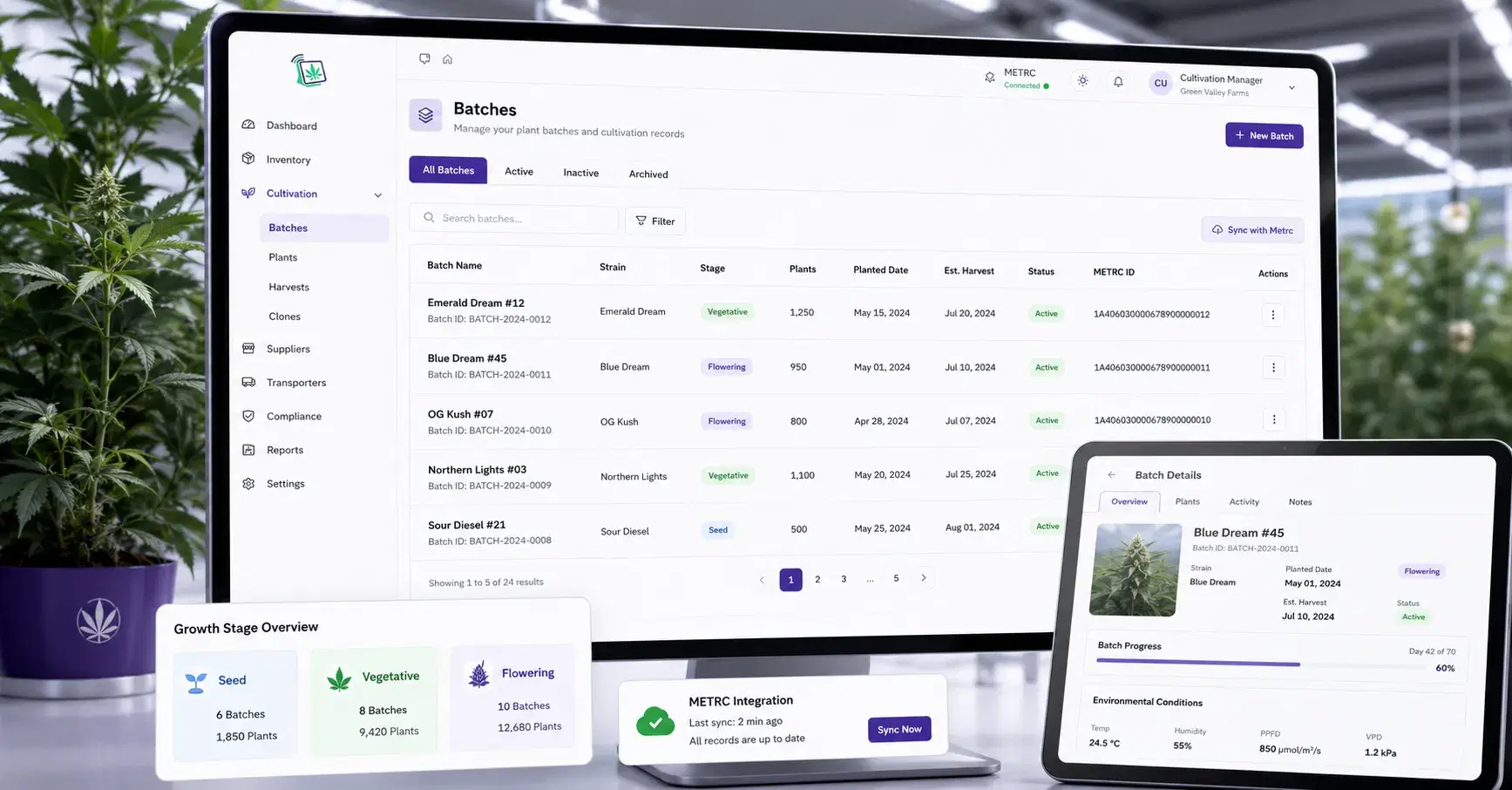
OperationsJuly 15, 2026
Batch Management for Cannabis Growers: Simplify Every Growth Stage with Weed POS
Track seed and clone batches, growth phases, plant counts, and METRC sync in one Weed POS Batch Management dashboard built for cannabis cultivators.
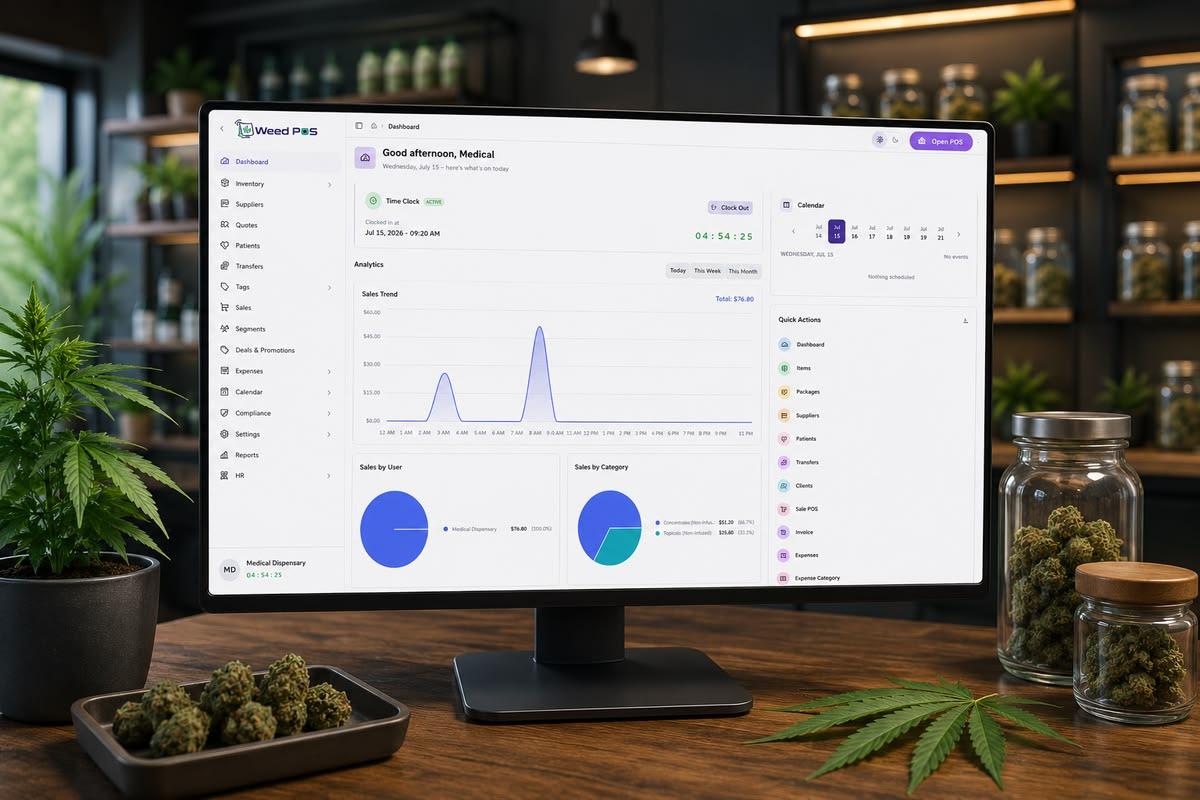
OperationsJune 24, 2026
Common Challenges Facing Oklahoma Cannabis Retailers
Oklahoma cannabis retailers face METRC pressure, patient compliance, inventory shrink, and fierce competition — here are the operational challenges and how the right POS addresses them.
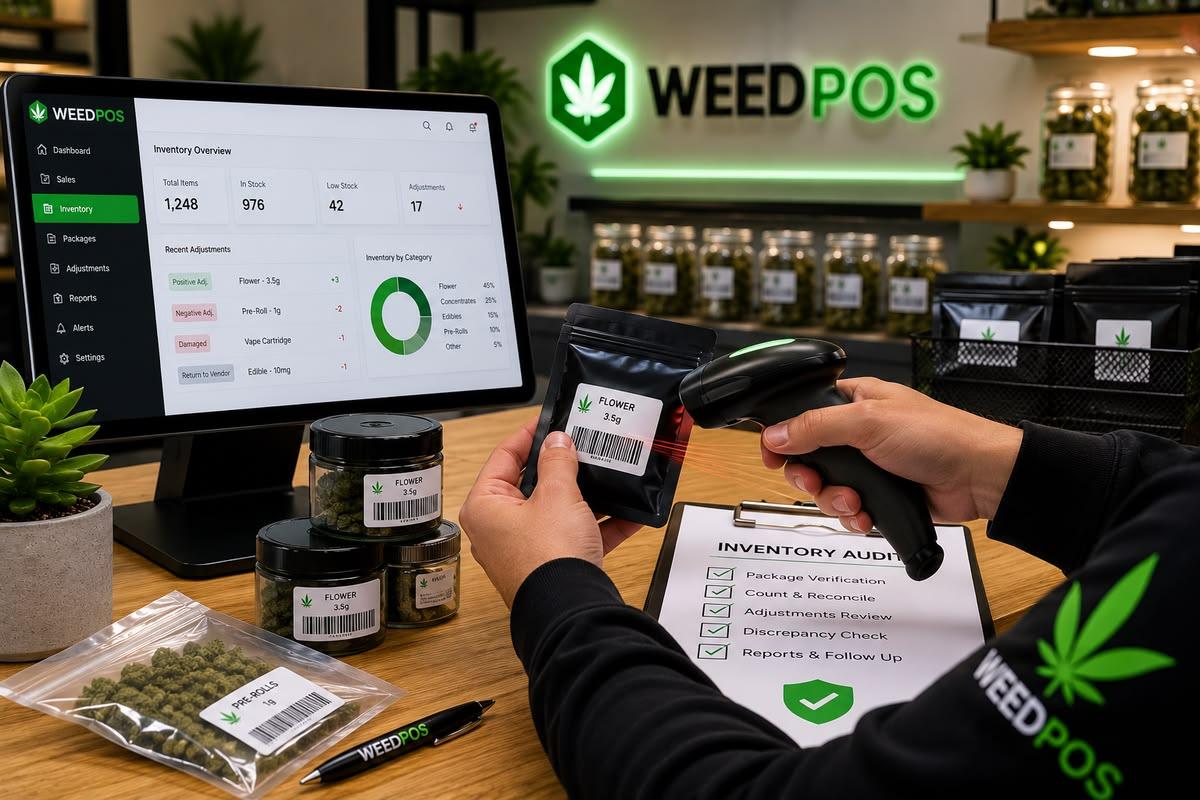
OperationsJune 20, 2026
How to Reduce Inventory Loss in Cannabis Retail
Practical steps to reduce shrink, loss, and untracked adjustments in cannabis retail.