Common Challenges Facing Oklahoma Cannabis Retailers
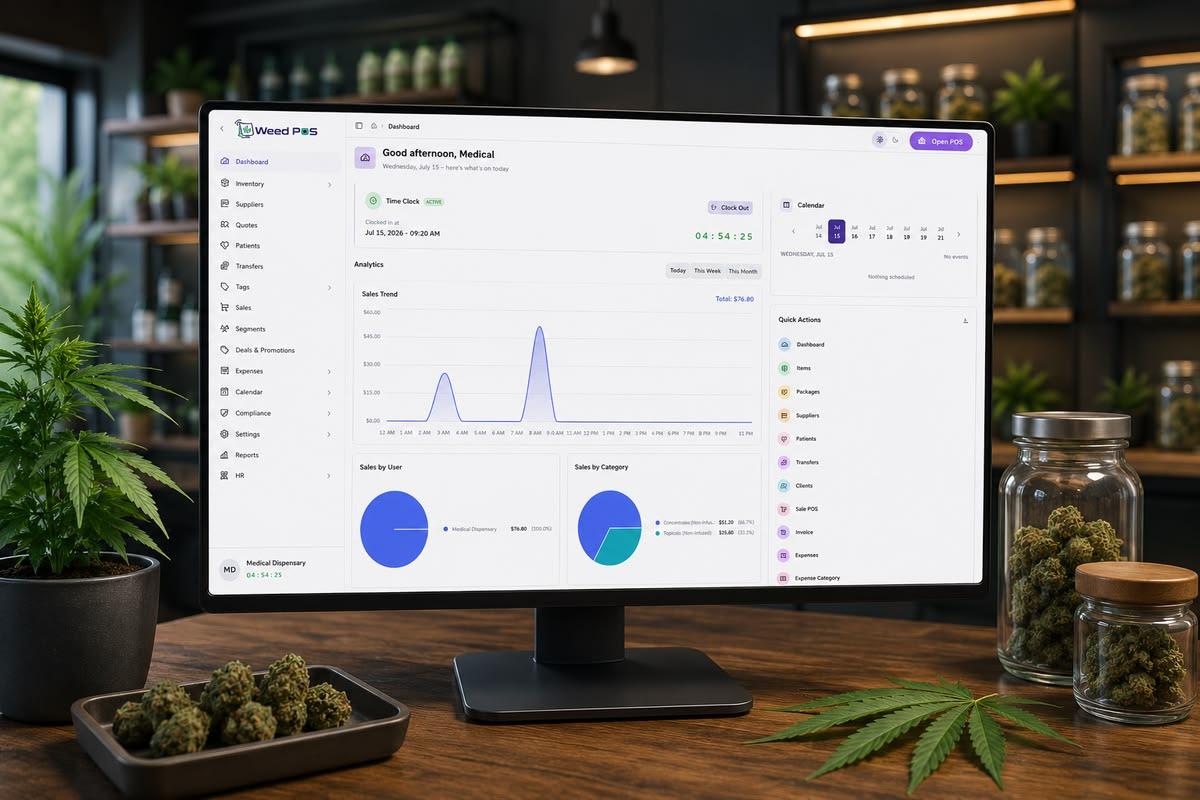
Running a dispensary in Oklahoma means selling in one of the most active — and most crowded — medical cannabis markets in the United States. Operators face the same retail fundamentals as any store, plus regulatory requirements that turn small mistakes into license risk.
The common challenges facing Oklahoma cannabis retailers cluster around compliance, inventory, competition, and the software gap between what OMMA expects and what generic tools deliver.
This post names those challenges plainly and shows how operators solve them with workflows — and POS choices — built for Oklahoma OMMA.
Challenge 1: METRC accuracy under active enforcement
Oklahoma uses METRC for package-level tracking. OMMA enforcement in 2026 compares physical inventory to digital records during inspections.
Retailers struggle when:
- sales report late or in batches,
- package counts drift from state records,
- adjustments lack operator attribution,
- transfers are documented outside the POS.
The fix is not more spreadsheets. It is METRC integration that reports sales at checkout and keeps package inventory synchronized.
Operators who still upload METRC manually often employ someone whose entire job is reconciliation — a hidden tax that grows with volume.
Challenge 2: Patient ID and purchase limits at the counter
Oklahoma patient sales require valid credentials and enforced purchase limits. During busy shifts, manual checks fail.
Common failure patterns:
- mistyped patient IDs entering the system,
- expired cards slipping through,
- purchase math done by budtenders under pressure,
- overrides that leave weak audit trails.
Cannabis-specific Point of Sale software validates ID format and enforces limits during the cart build — blocking bad sales before they complete.
See patient ID checks and purchase limits for the counter workflow that prevents these findings.
Challenge 3: Inventory shrink and package drift
Shrink is profit loss and compliance risk combined. High-value categories move fast — and mis-scans, unrecorded adjustments, and poor package control show up first there.
Oklahoma retailers without package-level discipline discover problems during:
- weekly cycle counts,
- METRC reconciliation,
- OMMA inspections,
- month-end margin reviews that never reconcile.
Inventory systems that track METRC tags, log adjustments with reason codes, and flag discrepancies catch shrink early. Our post on reducing inventory loss covers operational habits that support the software.
Challenge 4: Saturated competition and license moratorium
Oklahoma's medical market is dense. A moratorium on new dispensary licenses through at least 2028 means patient retention matters more than land-grab growth.
Retailers compete on:
- checkout speed and service,
- product availability accuracy,
- loyalty and repeat visits,
- trust built through consistent compliance.
Operators who treat software as a cost center fall behind operators who treat it as a retention tool — faster lines, accurate listings, and reliable promotions connected to inventory.
Challenge 5: Fragmented software stacks
Many Oklahoma retailers run:
- a generic register,
- METRC portal uploads,
- inventory spreadsheets,
- separate loyalty tools,
- cash counts on paper.
Each handoff creates latency and error. Managers become integrators between systems instead of running the store.
Unified cannabis POS platforms collapse those handoffs. One sale updates inventory, METRC, loyalty, and reporting — the model described in why operations-grade HR, cash, and reports win.
Challenge 6: Reporting owners and accountants cannot trust
Owners need margin visibility. Accountants need clean tax and sales exports. OMMA needs audit trails.
When reports require manual assembly from multiple exports, decisions arrive late and inspections get stressful.
Reports should pull from the same database as the register — sales, taxes, inventory movement, and adjustments in exportable formats without reconstruction.
Challenge 7: Internet outages and peak-hour reliability
Oklahoma locations lose connectivity. Peak hours are when outages hurt most.
Retailers challenge: stop sales and lose revenue, or sell offline and risk METRC gaps.
Offline-capable POS that queues transactions with timestamps and syncs on reconnect solves both problems. Budtenders keep working; records stay complete.
How challenges map to solutions
| Oklahoma retail challenge | Symptom on the floor | POS-led solution |
|---|---|---|
| METRC enforcement | Weekend reconciliation panic | Automatic sales reporting at checkout |
| Patient compliance | ID and limit errors | Format checks and real-time limits |
| Inventory shrink | Counts never match state | Package tracking with adjustment logs |
| Competition | Lost patients to faster stores | Quick checkout and accurate stock |
| Fragmented tools | Duplicate data entry | Unified compliance and retail stack |
| Weak reporting | Late purchasing decisions | Margin and velocity analytics |
| Connectivity | Sales stop or records gap | Offline queue with METRC sync |
Why Oklahoma-specific software matters for these challenges
Multi-state POS platforms spread engineering across dozens of regulatory models. Oklahoma-specific platforms — built around OMMA and METRC from day one — encode the workflows local inspectors actually test.
That is the difference between configuring a generic system to "mostly work" and using software where Oklahoma compliance is the default path, not a plugin.
Weed POS addresses these retailer challenges as one connected platform: METRC at checkout, package inventory, patient rules, reporting, and operations modules Oklahoma operators use daily.
For the regulatory backdrop, read the OMMA compliance checklist for 2026.
Conclusion
Oklahoma cannabis retailers face compliance pressure, inventory complexity, and intense competition — often with software never designed for their market.
Naming the challenges is the first step. Solving them requires POS workflows that make METRC accuracy, patient validation, and trustworthy reporting the normal outcome of every shift.
Review pricing, then book a demo to map your top three operational challenges to live Weed POS workflows.
Frequently asked questions
What is the biggest compliance challenge for Oklahoma dispensaries?
Keeping METRC records matched to physical package inventory while reporting every sale in real time. Manual reporting and generic POS systems create gaps that OMMA inspectors find during physical inventory comparisons.
Why is competition a unique challenge in Oklahoma?
Oklahoma has one of the most saturated medical cannabis markets in the country, with a license moratorium through at least 2028. Incumbent dispensaries must retain patients and operate efficiently because new licenses are not opening nearby.
How does inventory shrink affect Oklahoma retailers?
Shrink from unrecorded adjustments, mis-scans, and package drift creates both profit loss and audit risk. Package-level tracking with discrepancy alerts helps retailers catch problems before inspections do.
Can software reduce daily operational challenges?
Yes. A cannabis POS built for Oklahoma automates METRC reporting, enforces patient ID and purchase limits at checkout, unifies inventory, and produces reports without spreadsheet reconciliation — reducing the labor behind each challenge.
Book a Weed POS Demo
See how Weed POS handles OMMA compliance, inventory, and checkout for Oklahoma dispensaries, all in one operating system.
Related articles
OperationsJuly 15, 2026
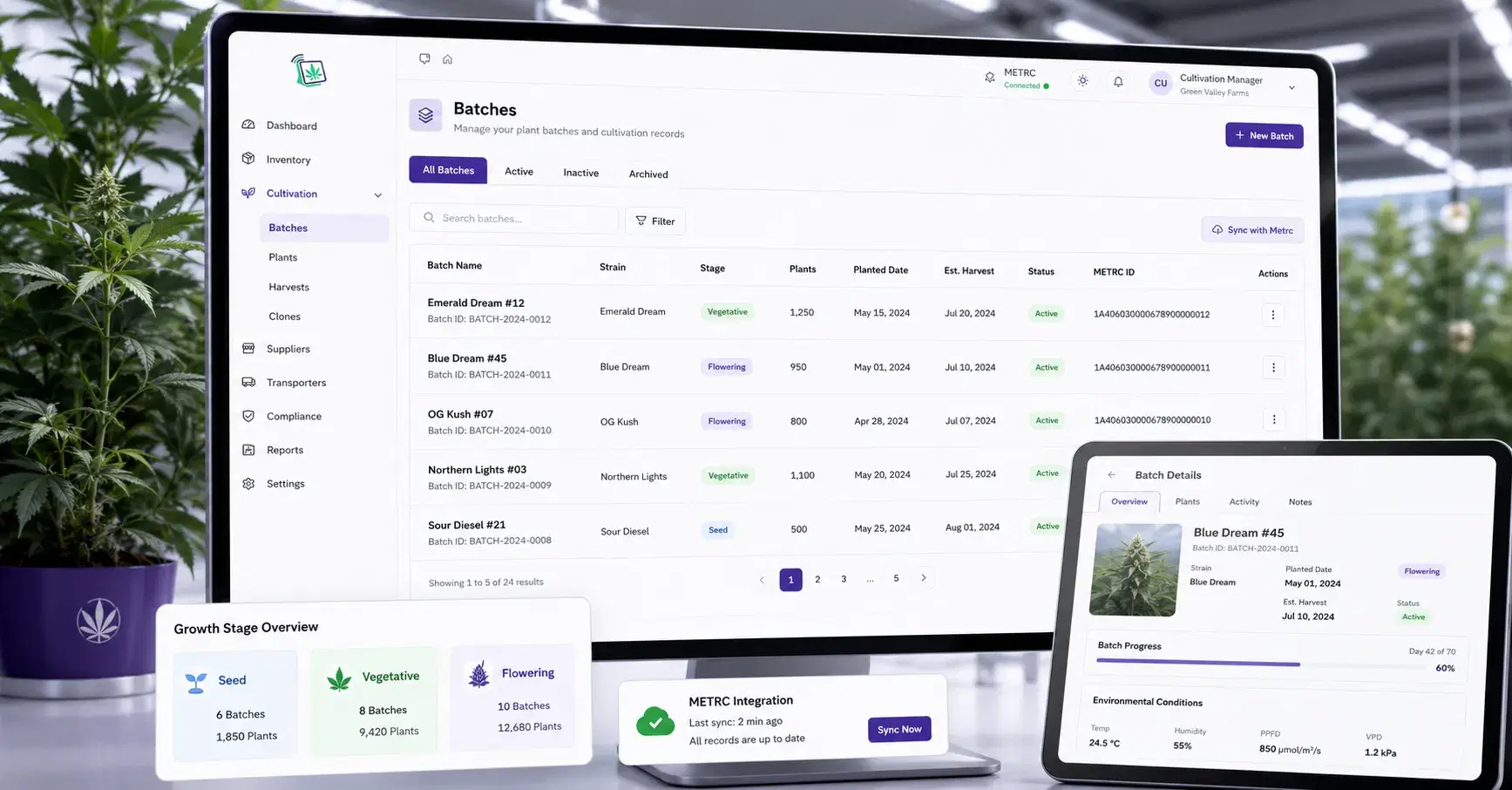
Batch Management for Cannabis Growers: Simplify Every Growth Stage with Weed POS
Track seed and clone batches, growth phases, plant counts, and METRC sync in one Weed POS Batch Management dashboard built for cannabis cultivators.
OperationsJune 20, 2026
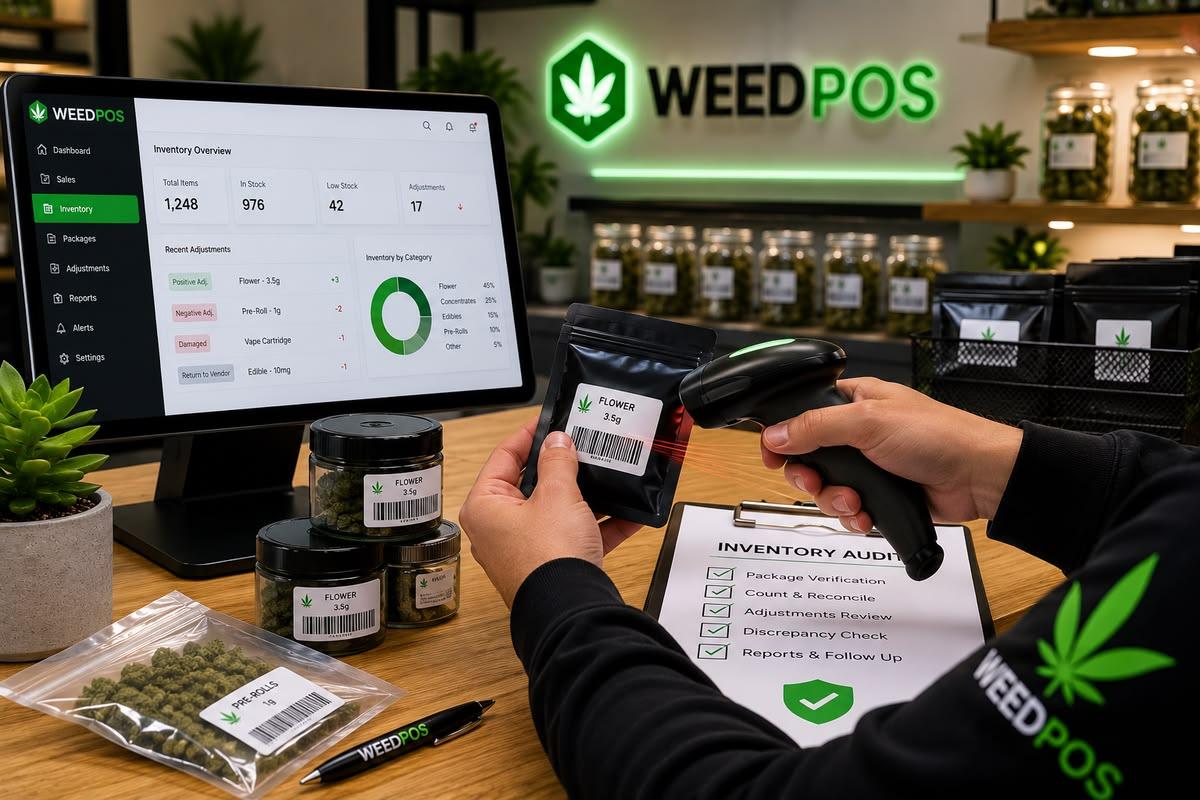
How to Reduce Inventory Loss in Cannabis Retail
Practical steps to reduce shrink, loss, and untracked adjustments in cannabis retail.
OperationsJune 17, 2026
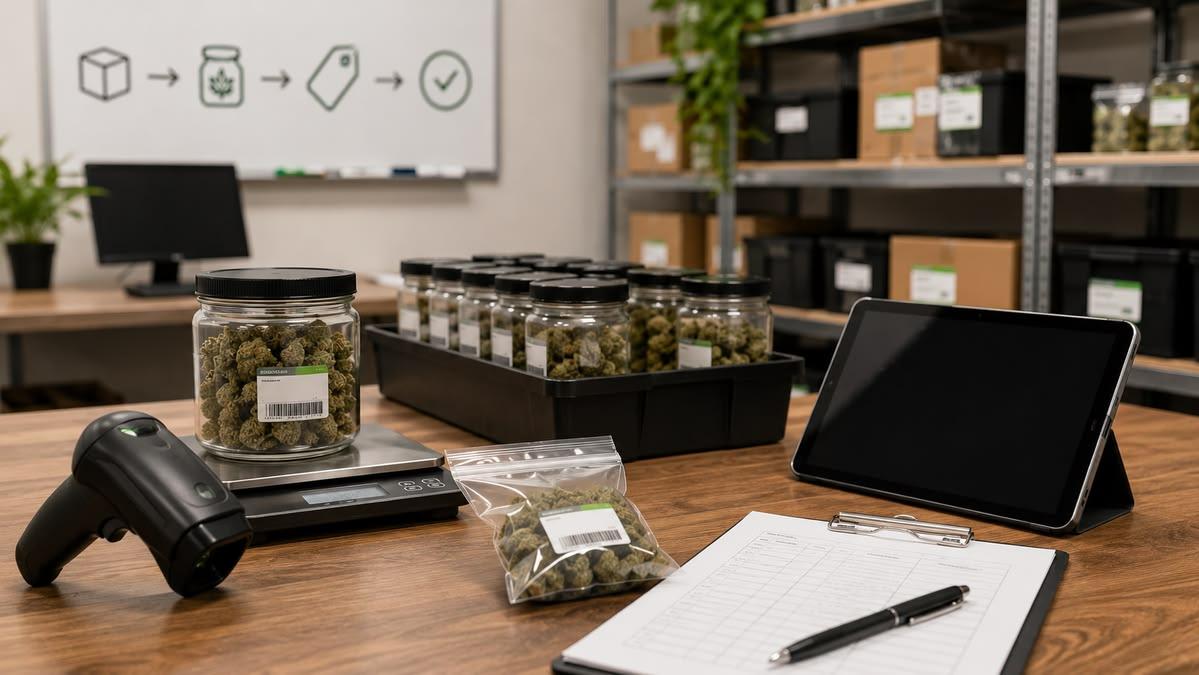
Cannabis Inventory Management Best Practices
Operational best practices for managing cannabis inventory, from intake to sale.