Why Inventory Visibility Is the Most Profitable Upgrade for Oklahoma Cannabis Retail
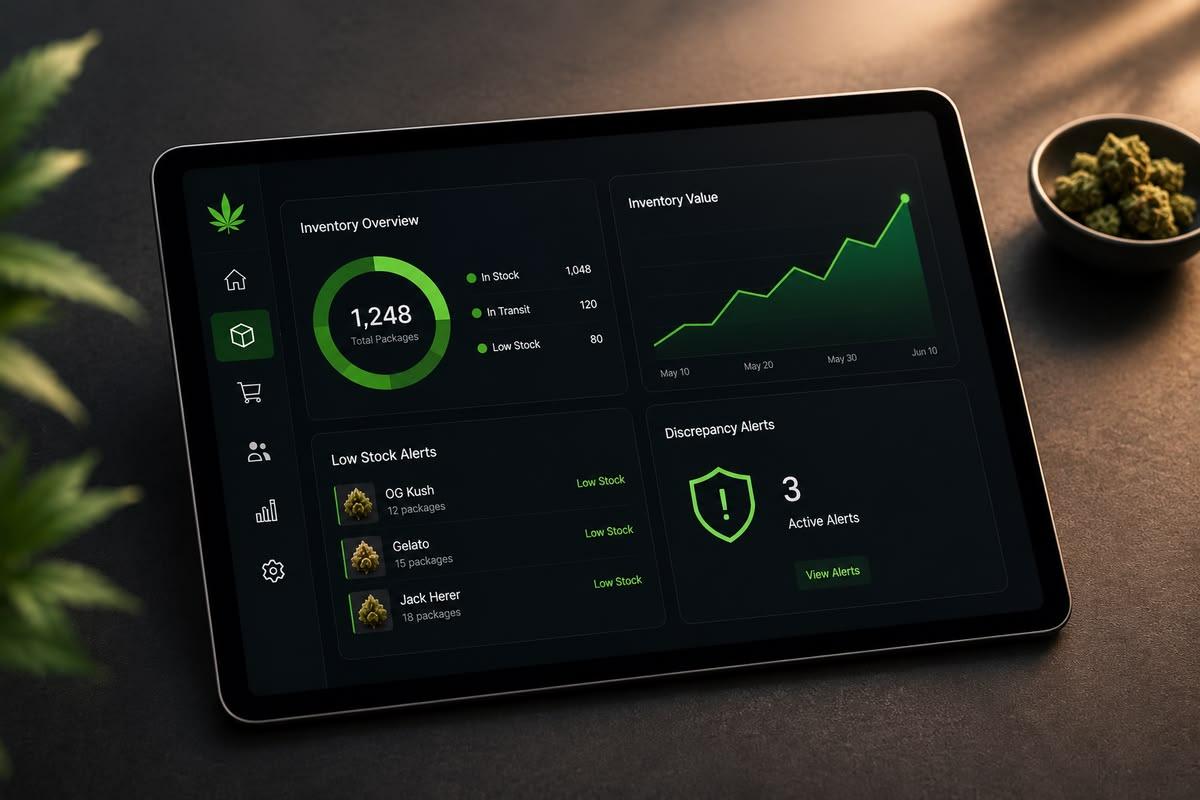
In Oklahoma cannabis retail, inventory visibility is more than a convenience. It is the difference between a profitable week and a constant chase.
Inventory work is where the industry leaks margin: blind spots become shrink, out-of-stocks become missed revenue, and manual reconciliation becomes a recurring expense. A modern cannabis POS that tracks inventory at the package level makes those problems visible before they become losses.
This article explains why visibility matters in the Oklahoma market, how a package-aware POS changes the playbook, and why that upgrade is one of the most profitable investments a dispensary can make. It also shows how better visibility feeds OMMA-ready reporting, faster purchasing, and lower operational risk.
Why real-time inventory visibility is a profit driver in Oklahoma
Inventory is the single operational area where the state, the counter, and the back office all collide. OMMA requires package-level accuracy. Budtenders need the right product in hand. Managers need to order and price with confidence. When visibility breaks down at any of those points, the result is wasted time and missed revenue.
A visible inventory system shows three things clearly: what is on the shelf, what is committed to sales or transfers, and what the state believes you have. When those three numbers are aligned, the dispensary can run lean and respond quickly. When they are not, every hour spent chasing down a count is an hour taken from serving patients.
That alignment is why inventory visibility is a profit driver. It reduces shrink by catching discrepancies early. It prevents emergency orders by making low stock obvious. It improves pricing decisions because the team knows which products are moving and which are not. Those are not vague benefits. They are real savings in cost of goods sold, labor, and lost sales.
The problem with inventory systems built for general retail
Most dispensaries start on systems designed for generic retail. Those platforms track inventory in broad categories, not by package. They may know you have five units of a strain, but they do not know which package tag belongs to which package, what the state expects, or whether a package was split.
That leaves a lot of work to people. Staff have to record package tags in a separate ledger, use spreadsheets to reconcile what is on the shelf with what the state sees, and manually adjust counts whenever inventory moves. The process is possible, but it is slow and fragile.
The expensive part is not the initial data entry. It is the drift that develops later. A package gets split at the counter. A transfer departs with one package missing. A sample is taken and logged on a sticky note. Each of those events changes the physical inventory and the state record differently. The more this happens, the more the system becomes a story of exceptions instead of a live picture.
That is the point where better visibility becomes more profitable than cheaper software. Investing a little more in a system that keeps the counts aligned pays back quickly because it stops the leak before it widens.
What package-level inventory visibility looks like in practice
Package-level visibility is the foundation of Inventory that works for Oklahoma.
A package-aware POS tracks the state tag and quantity for every package you receive. It understands splits, combines, transfers, and adjustments as operations that change the package record, not just the number on a shelf. That means the platform knows whether a package is still in stock, whether it is part of a transfer in transit, or whether it has been adjusted for spoilage.
The most important part is that the system presents this information in a way the team can act on. A manager should be able to see:
- which packages are low or out of stock,
- which packages are committed to pending transfers,
- which adjustments are pending review,
- which packages have discrepancy alerts,
- and whether the state count matches the floor count.
When the system can answer those questions instantly, the team stops fighting inventory invisibility and starts making better decisions.
Discrepancy alerts and shrink reduction
Visibility is not just about the numbers you can see. It is also about the alerts you receive when something does not add up.
A cannabis POS with strong inventory visibility raises discrepancy alerts when the expected count and the state count diverge. Because OMMA requires the two to match, early alerts matter. A small package mismatch caught immediately is a minutes-long correction. The same mismatch caught weeks later is a labor-intensive audit.
Shrink reduction is a direct benefit of these alerts. Some losses are theft and breakage, but many are simply the result of poor tracking. When packages are moved, split, or adjusted without a clear state record, the inventory starts to drift. Visibility tools make those changes visible and force the team to resolve them quickly.
The cost of shrink is both direct and indirect. Direct cost is the lost product. Indirect cost is the labor needed to find and fix the discrepancy. A system that gives you the right visibility turns those costs into manageable operations instead of recurring surprises.
Faster ordering and fewer emergency restocks
A visible inventory system is also a better purchasing system.
When managers can see truly accurate stock levels, they can reorder the right products before they run out. That means fewer emergency orders, which are often more expensive and stressful. It also means the store is less likely to miss a sale because the product was not available.
A modern POS can make this easy with alerts and reorder suggestions. When inventory is tracked by package, the system knows not only that you have a strain in stock, but the exact packages and quantities available. That makes both the ordering decision and the receiving process simpler.
That capability feeds profitability directly. Emergency orders cost more. Stockouts cost sales. Slow ordering costs customer trust. Better visibility reduces all three.
The reporting advantage of accurate inventory data
Inventory visibility is not just an operations benefit. It is also a reporting benefit.
When inventory is accurate and package-level, the same data can power sales analysis, shrink reports, and OMMA-ready exports. That means the finance team and the compliance team are using the same numbers, which reduces reconciliation work and improves confidence.
For example, accurate inventory data makes reports on product velocity meaningful. If the system only knows that a strain category had ten units, that report is noisy. If the system knows which packages were sold, transferred, or adjusted, the report becomes actionable.
Accurate inventory also makes OMMA reporting less painful. The state wants package-level details. If the POS tracks those details automatically, the audit export is an export of the live database instead of a manually assembled spreadsheet. That is a big operational win.
Comparing inventory workflows: old tools versus modern cannabis POS
This table shows how the workflows differ in real terms.
| Workflow area | Legacy tools | Modern cannabis POS |
|---|---|---|
| Package tracking | General item counts, manual tag records | Package-level tracking with state tags and lot details |
| Transfers | Manual manifest entry, spreadsheets | Built-in transfer manifests linked to inventory |
| Adjustments | Separate log or spreadsheet notes | Logged with reason, operator, and prior value automatically |
| Shrink handling | Reactive investigation after count drift | Active discrepancy alerts and early correction |
| Reordering | Guesswork or static par levels | Visibility-based reorder alerts and purchase planning |
The left column is a workflow that costs time. The right column is a workflow that turns inventory work into a business advantage.
How better visibility supports OMMA and daily operations together
The best inventory visibility systems do not isolate compliance from operations. They connect them.
That means a package-level inventory record feeds both the daily counter and the state reporting process. When a package is sold, the same record updates the shelf count, the POS sale, and the METRC compliance flow. When a package is adjusted, the system records the reason and the prior value, making the change traceable for audits.
This connection matters because Oklahoma dispensary operations are often lean. The team that makes the sale is the same team that helps with counting, ordering, and compliance review. If the inventory system is easy to understand, that team can contribute to better visibility without needing a separate compliance specialist.
That is one reason modern cannabis POS platforms also include reporting and operational tools in the same product. A store that sees inventory, sales, and compliance in one place can react faster and make better on-the-fly decisions.
Choosing the right inventory visibility upgrade
Not all inventory tools are equal. When you are evaluating systems, look for the capabilities that matter most in Oklahoma.
- Does the system track package tags and quantities at the package level?
- Does it connect inventory changes to state reporting and manifest generation?
- Does it surface discrepancy alerts when state counts drift from floor counts?
- Does it let you see both the physical shelf and the OMMA view of inventory in one place?
- Does it support sales, transfers, adjustments, and lab certificate receipts without requiring separate spreadsheets?
- Is the reorder workflow based on actual available packages, or just high-level product categories?
Also ask how the system integrates with other operational workflows. Better visibility is most profitable when it supports reports, compliance, and the counter together. If inventory is a separate module with its own screens and exports, the benefit will be smaller than it looks.
For a closer look at how inventory visibility fits into a broader compliance upgrade, see our guide to METRC compliance made simple. If you want to compare implementation and cost, start with pricing and then contact the team for a walk-through.
Conclusion: visibility is the upgrade that pays for itself
In Oklahoma cannabis retail, inventory visibility is not a luxury. It is a profitability upgrade.
When your system shows package-level stock, monitors discrepancies, and connects inventory changes to the state, the dispensary stops leaking value through shrink, stockouts, and manual reconciliation. The result is fewer emergency orders, stronger margins, faster purchasing decisions, and a compliance posture that is easier to maintain.
A modern cannabis POS can make that visibility part of daily operations, not a separate project. That is why it is one of the most profitable upgrades a dispensary can make — the cost of the tool is paid back in reduced losses, less labor, and better decision-making.
To see how this works in your own dispensary, schedule a demo and we will walk through your inventory view, package tracking, and order workflow live. If you want to evaluate the investment first, check pricing and we will help you compare the numbers to your current flow.
Frequently asked questions
Why is inventory visibility especially important for Oklahoma dispensaries?
Oklahoma dispensaries must match their package-level inventory to OMMA records. Real-time visibility reduces shrink, avoids state reporting gaps, and protects sales margins.
Can a cannabis POS reduce inventory losses?
Yes. A cannabis POS with package-level tracking and discrepancy alerts helps dispensaries identify shrink, transfers, and adjustments quickly before they become costly mistakes.
How does better inventory visibility impact ordering?
With accurate stock levels, dispensaries can restock the right products at the right time and avoid emergency orders, which improves cash flow and prevents lost sales.
Will better inventory visibility help with OMMA audits?
Absolutely. When inventory is tracked at the package level and matched to state records, audit preparation shifts from manual reconciliation to exporting an already accurate trail.
Book a Weed POS Demo
See how Weed POS handles OMMA compliance, inventory, and checkout for Oklahoma dispensaries, all in one operating system.
Related articles
OperationsJuly 15, 2026
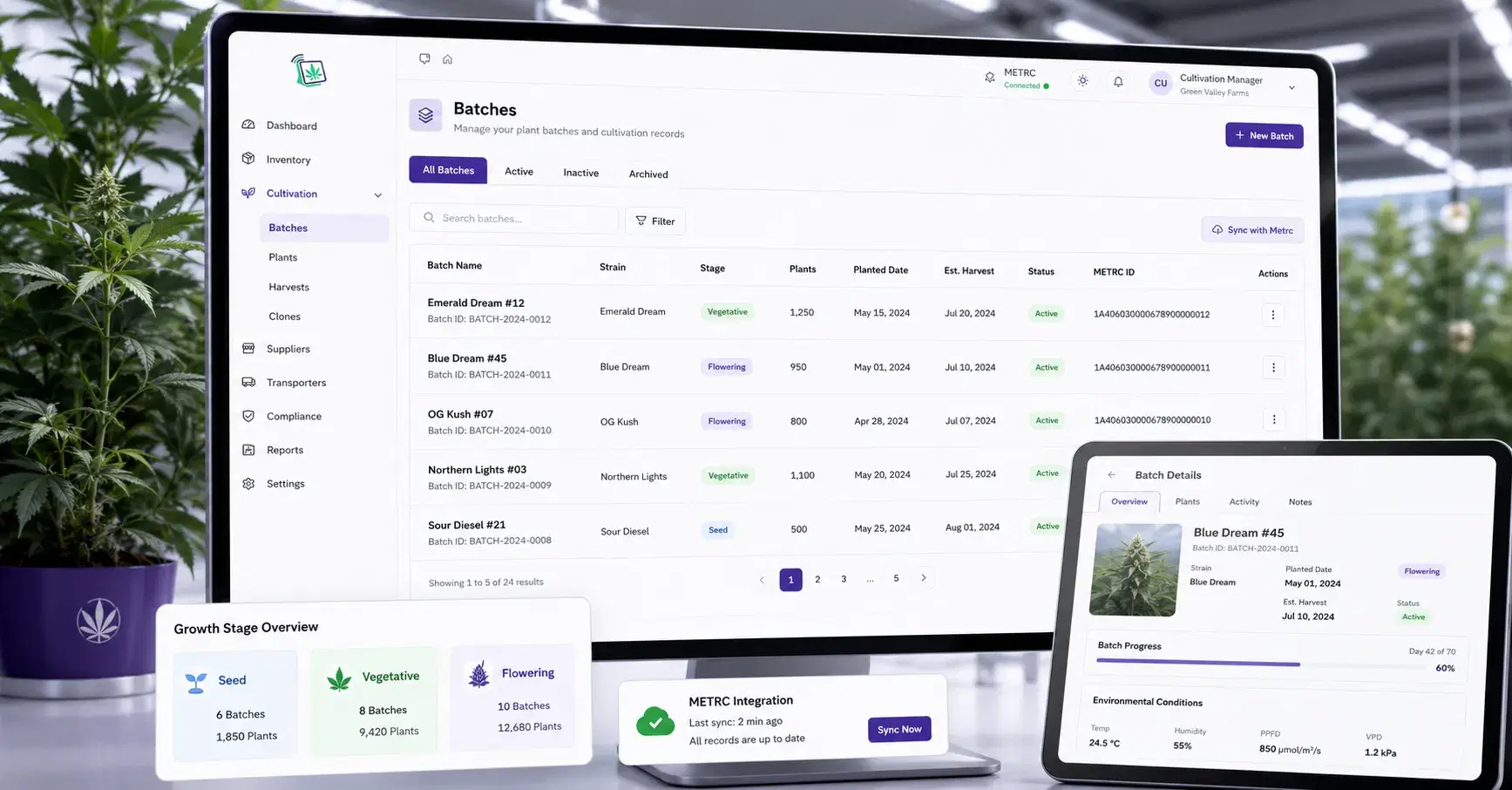
Batch Management for Cannabis Growers: Simplify Every Growth Stage with Weed POS
Track seed and clone batches, growth phases, plant counts, and METRC sync in one Weed POS Batch Management dashboard built for cannabis cultivators.
OperationsJune 24, 2026
Common Challenges Facing Oklahoma Cannabis Retailers
Oklahoma cannabis retailers face METRC pressure, patient compliance, inventory shrink, and fierce competition — here are the operational challenges and how the right POS addresses them.
OperationsJune 20, 2026
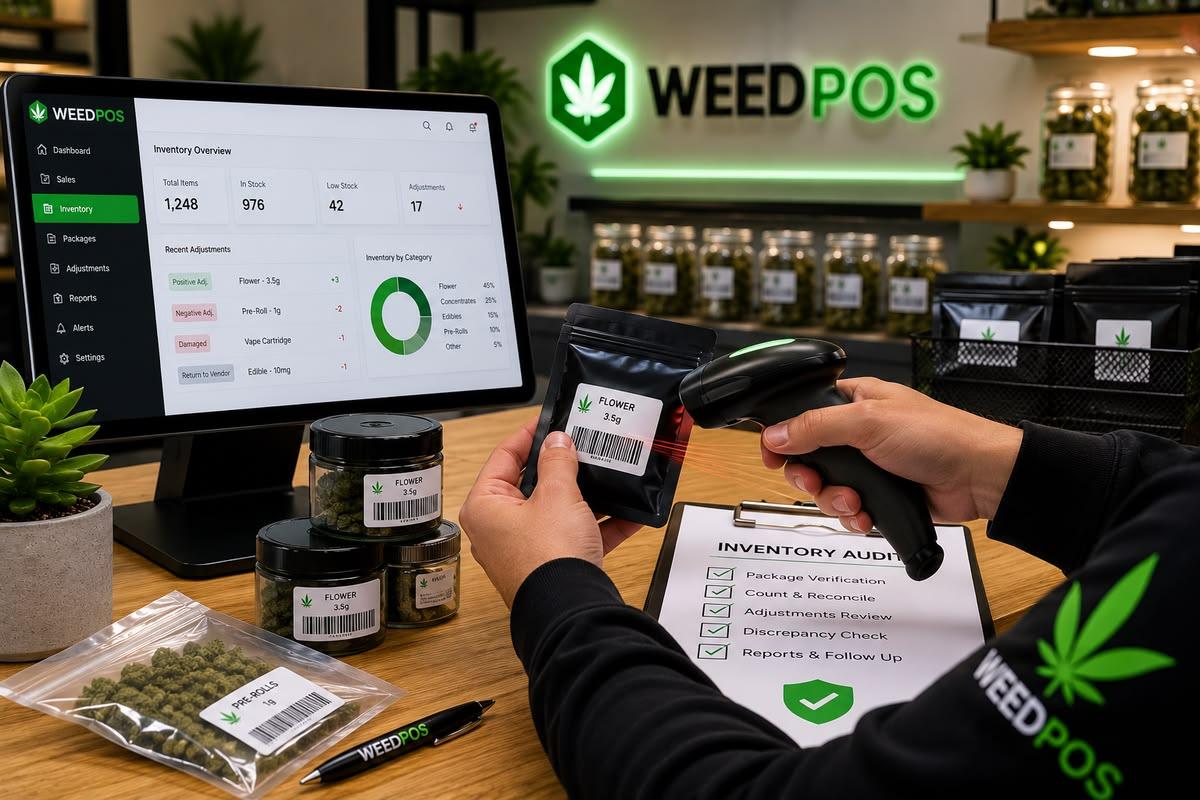
How to Reduce Inventory Loss in Cannabis Retail
Practical steps to reduce shrink, loss, and untracked adjustments in cannabis retail.