Why Your Best-Selling Products Might Be Hurting Your Dispensary

Most dispensary dashboards highlight one number: what sold the most. Owners celebrate top SKUs. Budtenders recommend familiar movers. Buyers reorder what disappears fastest.
But high sales volume does not always mean high profit. Sometimes your best-selling products are the ones quietly compressing margin, tying up cash in slow-turning inventory, or absorbing discounts that never show up on a simple "units sold" report.
Oklahoma dispensaries operating in a saturated medical market cannot afford to optimize for volume alone. You need reporting that connects sales to margin, package age, and promotion cost — the numbers that reveal whether a top seller is actually helping the business.
The volume trap in cannabis retail
Cannabis retail rewards visibility. Patients ask for popular strains. Staff push what they know moves. Vendors incentivize high-volume placements.
Volume is easy to measure. Profit per package is harder — especially when:
- products are discounted through loyalty or promotions,
- shrink hits high-value categories first,
- old packages sit behind fast movers,
- METRC inventory and financial margin tell different stories.
Without margin-aware analytics, operators keep feeding the volume machine while higher-profit inventory ages on the shelf.
When top sellers hurt margin
Low-margin hero SKUs
A product can lead unit sales while contributing modest gross margin. If marketing, staff attention, and shelf space concentrate on that SKU, the dispensary optimizes for revenue line items — not bottom-line contribution.
Discount-driven velocity
Promotions inflate sales counts. A "best seller" during a happy hour may be best only because it was cheapest. When the promotion ends, velocity drops — and you never separated incremental demand from discounted existing demand.
Shrink on high-touch categories
Fast-moving flower and concentrate categories often carry higher shrink risk. A top seller that moves quickly but loses packages to mis-scans or unrecorded adjustments can cost more than a slower SKU with tight control.
Cash tied up in reorder bias
Buyers reorder what sold fast last month. If that product turns slowly at full price or carries low margin, cash gets locked in inventory that looks busy but earns poorly.
What to measure instead of volume alone
| Metric | What it tells you | Why it beats raw sales count |
|---|---|---|
| Gross margin by SKU/category | Profit contribution | Separates busy from profitable |
| Inventory turnover | How fast capital returns | Flags overstock on "popular" items |
| Days on hand by package | Aging risk | Shows hidden slow movers behind top SKUs |
| Shrink by package tag | Loss by product | Connects velocity to control problems |
| Promotion lift vs discount cost | True campaign ROI | Reveals fake "winners" from discounts |
| Sell-through after receiving | Buyer accuracy | Tests whether reorders made sense |
Reports built into your POS should export these views without manual spreadsheet assembly. If analytics live outside the register, the numbers are always late — and purchasing decisions stay biased toward what felt busy.
Package-level data changes the story
Oklahoma dispensaries track inventory by METRC package, not just product name. Two packages of the "same" strain can have different costs, ages, and margin profiles.
Package-level inventory reporting lets managers see:
- which tags are aging past target days on hand,
- which packages turned in the first week after intake,
- where cycle counts disagree with METRC,
- which high-volume sales drew from discounted or older packages.
That granularity turns "our best seller" from a marketing slogan into a purchasing decision with numbers attached.
Our guide on inventory visibility for Oklahoma cannabis retail explains why package-level view is the foundation for profit-focused operations.
Promotions without profit blindness
Loyalty and promotions are powerful — but only when you can measure them.
When promotion rules live inside the POS, each discounted sale stays connected to:
- the patient profile,
- the package sold,
- the compliance record,
- the margin after discount.
That lets operators compare campaigns by profit impact, not just redemptions. A promotion that spikes unit sales but erodes margin on your highest-velocity SKU may be a net loss even if the dashboard looks exciting.
See why loyalty and promotion automation matter for how integrated promotions stay compliant and measurable.
A practical review rhythm for Oklahoma operators
Run this monthly review using POS exports:
- Rank products by gross margin dollars, not units alone.
- Flag top sellers with below-average margin — question shelf space and reorder quantity.
- List packages over target days on hand — markdown, bundle, or stop reordering.
- Compare promotion periods to baseline margin — did profit grow or only volume?
- Review shrink exceptions on high-velocity categories — is the hero SKU also the leak?
Thirty minutes of margin-focused review often changes next month's purchase order more than any sales contest.
How Weed POS supports profit-focused operations
Weed POS connects sales, inventory, promotions, and reporting in one Oklahoma-built platform. Managers see what sold and what it cost to sell — at package level, with compliance records intact.
That is the difference between guessing which products help the business and knowing which ones fund it.
Operators pairing unified reporting with METRC-accurate inventory stop optimizing for busy shelves alone. They optimize for cash return per package — the metric that matters in a consolidating market.
Conclusion
Your best-selling products might be hurting your dispensary if you measure success by volume alone. Margin, package age, promotion cost, and shrink tell the real story.
Oklahoma operators who upgrade reporting — not just registers — make smarter purchasing, pricing, and promotion decisions without adding headcount.
Explore pricing, then book a demo to see product performance and margin reporting on your own catalog.
Frequently asked questions
Why can best-selling products hurt dispensary profits?
High-volume products often have lower margins, higher shrink risk, or heavy discounting. Without margin-aware reporting, dispensaries keep promoting items that move fast but contribute less profit — while higher-margin inventory sits on the shelf.
What reports should dispensaries use beyond top sellers?
Track margin by product and category, inventory turnover, days on hand, shrink by package, promotion lift versus discount cost, and sell-through after receiving. Volume alone does not show which products actually grow the business.
How does package-level POS data improve purchasing decisions?
Package-level tracking shows which tags are aging, which batches turn quickly, and where discrepancies appear. Managers can reorder profitable velocity items and reduce exposure on slow or low-margin packages before cash gets tied up.
Can a cannabis POS connect sales to promotion performance?
Yes. When promotions run inside the POS, discounted sales stay tied to patient, package, and compliance records — so operators can see whether a promotion increased profit or only discounted existing demand.
Book a Weed POS Demo
See how Weed POS handles OMMA compliance, inventory, and checkout for Oklahoma dispensaries, all in one operating system.
Related articles
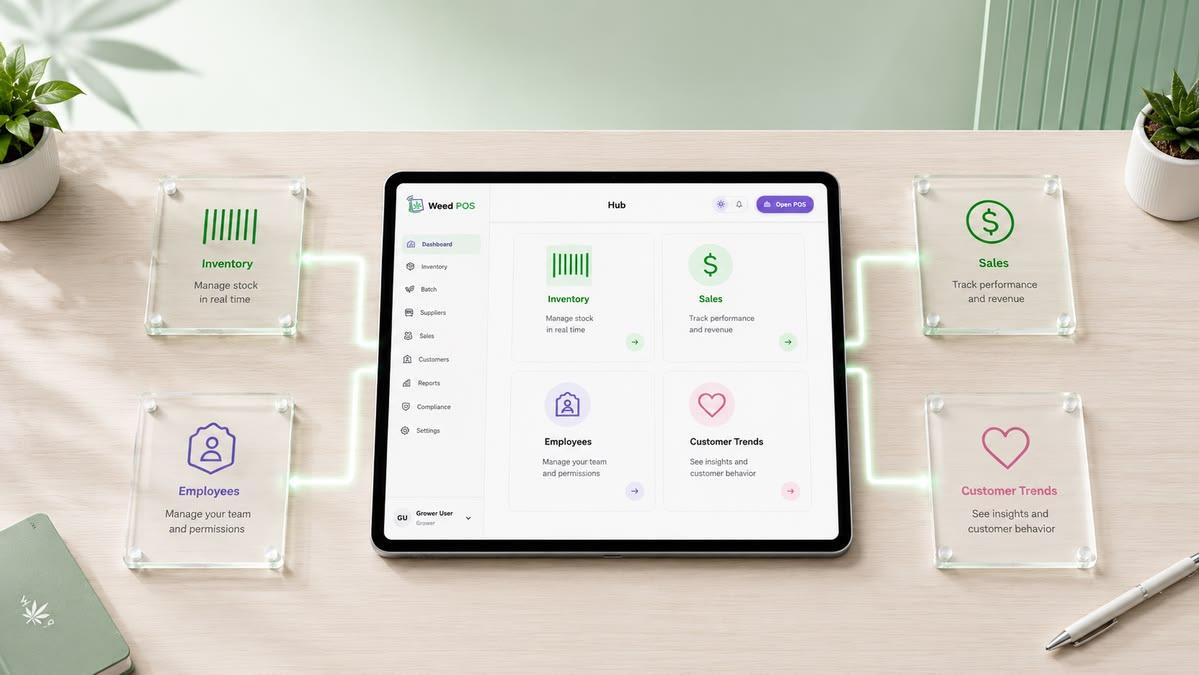
GrowthJuly 13, 2026
Is Your Oklahoma Dispensary Ready for the Next Stage of Growth?
When spreadsheets and basic software stop keeping up, Oklahoma dispensaries need a modern cannabis POS hub for inventory, sales, staff, and compliance visibility.
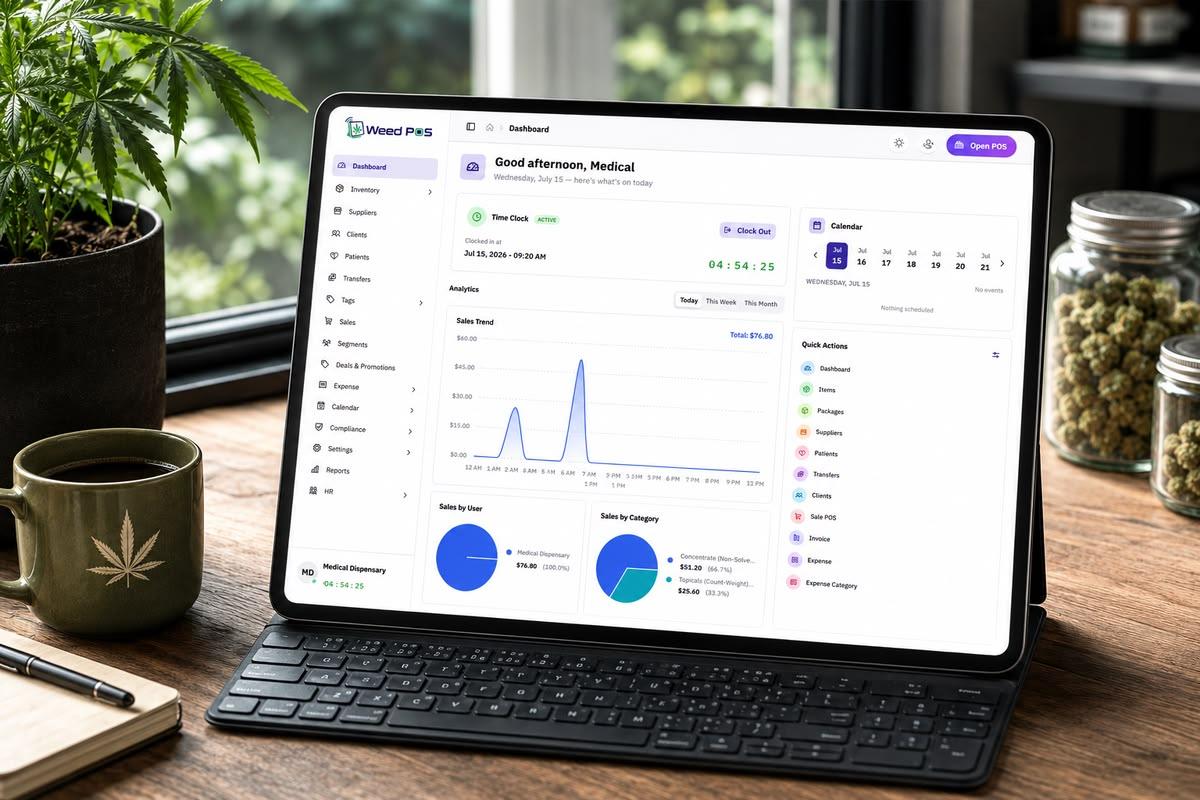
GrowthJuly 9, 2026
Answer Engine Optimization for Cannabis Dispensaries in 2026
Answer Engine Optimization helps cannabis dispensaries get cited in ChatGPT, Perplexity, and Google AI Overviews — here's what Oklahoma operators should implement in 2026.

GrowthJune 22, 2026
How Leafly Integration Syncs Inventory for Oklahoma Dispensaries
Connect Leafly to your dispensary POS for real-time inventory sync, accurate listings, and measurable foot-traffic impact.