How Loyalty Programs Increase Dispensary Revenue
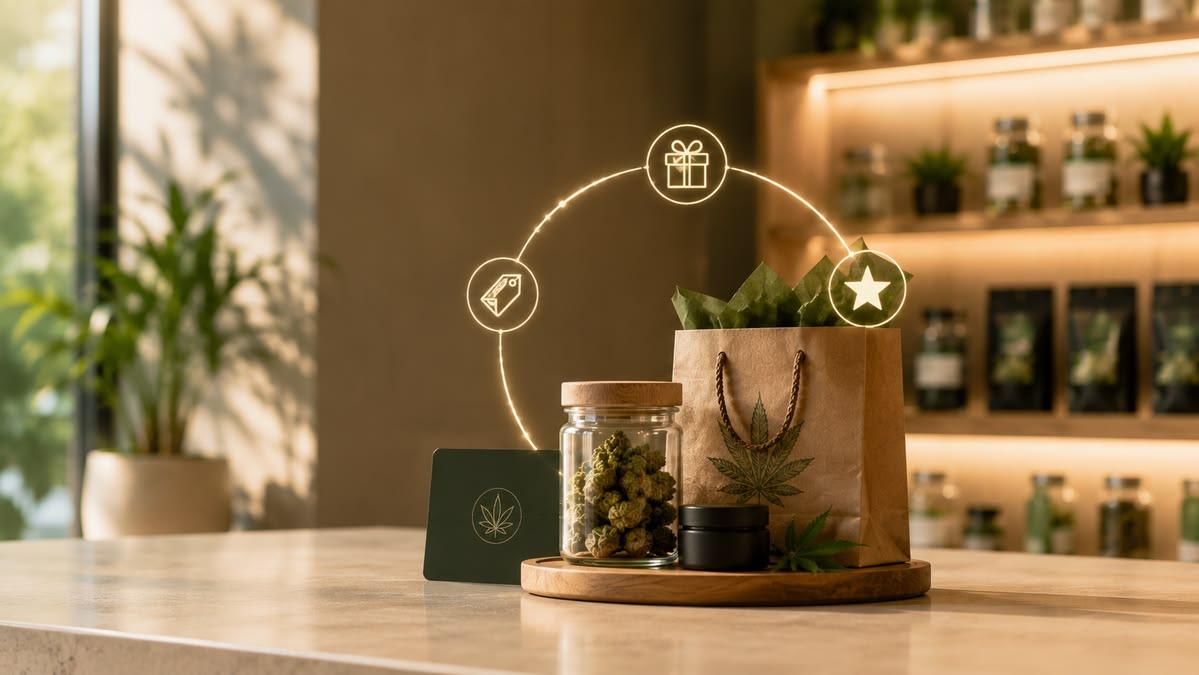
Loyalty programs are one of the most reliable ways dispensaries can increase revenue without raising prices. When designed around the right metrics, reward structures, and promotions, loyalty can turn occasional customers into frequent buyers and boost ticket size over time.
This article explains how dispensaries should think about loyalty in terms of:
- visit frequency,
- average order value (AOV),
- lifetime value (LTV),
- reward structures that work,
- measurement and experimentation,
- linking loyalty to inventory and promotional deals.
Start with the right loyalty metrics
The success of a dispensary loyalty program depends on measuring the right outcomes.
Key metrics to track:
- visit frequency: how often enrolled members return,
- average order value (AOV): the spend per transaction,
- lifetime value (LTV): total revenue from a customer over time,
- redemption rate: how often rewards are used,
- retention rate: how many members remain active.
A good loyalty program should deliver more than just enrollment counts. It should improve the customer behaviors that drive revenue: more visits, larger baskets, and stronger retention.
Reward structures that work for dispensaries
Not every reward program is equally effective. The best systems combine easy-to-understand earn mechanics with aspirational perks.
Effective reward structures include:
- points for spend: customers earn points for every dollar they spend, which can be redeemed for discounts or products,
- tiered perks: reward higher-spend customers with faster earn rates, exclusive product access, or members-only promotions,
- birthday bonuses: a reliable reason for a customer to visit during their birthday month,
- enrollment incentives: an initial discount or free product for signing up.
The clearest programs are simple enough for budtenders and customers to explain quickly. If members can’t easily understand how to earn or redeem rewards, engagement drops.
How to measure loyalty program success
Measurement is essential. A strong loyalty program is not built on assumptions — it is built on data.
Key measurement approaches:
- compare visit frequency and AOV for enrolled members versus non-members,
- track revenue uplift during loyalty promotions,
- use control groups to test new rewards or tiers,
- monitor how many members return within 30, 60, and 90 days,
- measure the impact of loyalty members on product mix and category performance.
When reporting is integrated with your POS, you can see whether loyalty members are spending more, buying certain product categories, or responding to targeted offers.
Experiment with offers and promotions
A loyalty program should evolve through experimentation.
Try these tests:
- double points on slow days to increase traffic,
- limited-time bonuses on new or premium products,
- tiered promotions that reward bigger spenders,
- email or SMS offers that bring members back after a dormant period.
Evaluate each test by measuring incremental revenue and retention. The best programs are those that maintain strong margins while encouraging repeat visits.
Link loyalty to inventory and promotional deals
Loyalty programs are most powerful when they connect to inventory and promotions.
Make sure your system can:
- apply rewards to the right products,
- reserve inventory for loyalty-driven pickup or bundle offers,
- highlight loyalty-eligible deals at the register,
- sync loyalty promotions with inventory signals.
This is where loyalty and inventory meet. If a promotion drives demand for a product that is out of stock, it creates a poor customer experience. A tightly integrated system helps you run offers on products you can actually fulfill.
Use reporting to optimize loyalty over time
Reporting is the tool that turns loyalty from a nice-to-have into a revenue driver.
Your loyalty program reporting should show:
- how often members shop,
- which rewards are redeemed most frequently,
- whether loyalty members spend more per visit,
- which segments generate the highest lifetime value,
- how loyalty affects traffic during promotions.
That data helps you refine the program, invest in the rewards that actually move the needle, and avoid incentives that simply erode margin.
Why loyalty matters for dispensary revenue
Well-designed loyalty programs do more than reward customers. They change behavior.
When customers know they earn points, access tiers, or get birthday perks, they are more likely to:
- choose your store over competitors,
- add extra items to increase their reward balance,
- return more frequently,
- stay active with your brand.
That is how loyalty turns into sustainable revenue growth.
Build loyalty with the right system and support
To get the most from a loyalty program, dispensaries should choose software that supports both reward execution and reporting.
Look for a platform that can:
- manage loyalty earning and redemption at the register,
- link rewards to product availability,
- report on member behavior and revenue impact,
- support targeted offers and tier-based perks.
If you want to design a loyalty program that increases visits, ticket size, and customer lifetime value, contact our team. We can help you build a program that uses your POS, loyalty tools, and reports to grow revenue without adding complexity.
Frequently asked questions
What rewards drive repeat visits?
Points for spend, birthday bonuses, and tiered perks tend to drive repeat visits and higher spend.
How to measure loyalty program success?
Track visit frequency, average ticket, and lifetime value for enrolled patients vs control groups.
Book a Weed POS Demo
See how Weed POS handles OMMA compliance, inventory, and checkout for Oklahoma dispensaries, all in one operating system.
Related articles
GrowthJuly 13, 2026
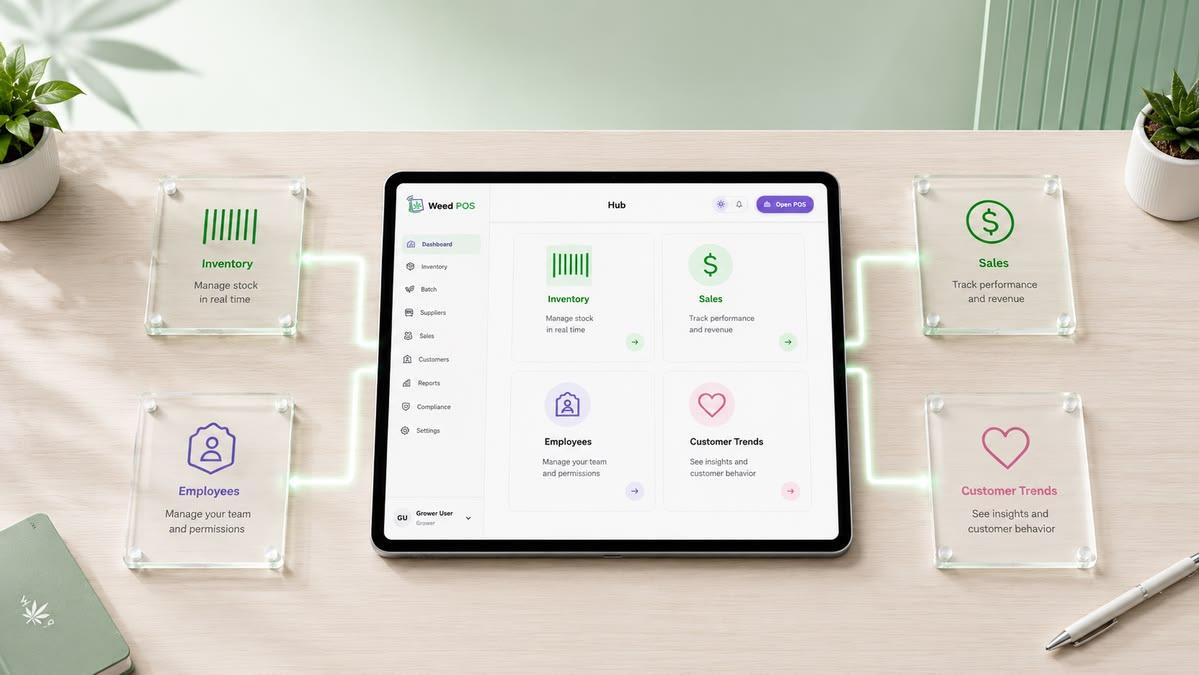
Is Your Oklahoma Dispensary Ready for the Next Stage of Growth?
When spreadsheets and basic software stop keeping up, Oklahoma dispensaries need a modern cannabis POS hub for inventory, sales, staff, and compliance visibility.
GrowthJuly 9, 2026
Answer Engine Optimization for Cannabis Dispensaries in 2026
Answer Engine Optimization helps cannabis dispensaries get cited in ChatGPT, Perplexity, and Google AI Overviews — here's what Oklahoma operators should implement in 2026.
GrowthJuly 1, 2026
Why Your Best-Selling Products Might Be Hurting Your Dispensary
High sales volume does not always mean high profit. Oklahoma dispensaries need package-level reporting to see margin, velocity, and inventory cost — not just top sellers.