Cannabis Inventory Management Best Practices
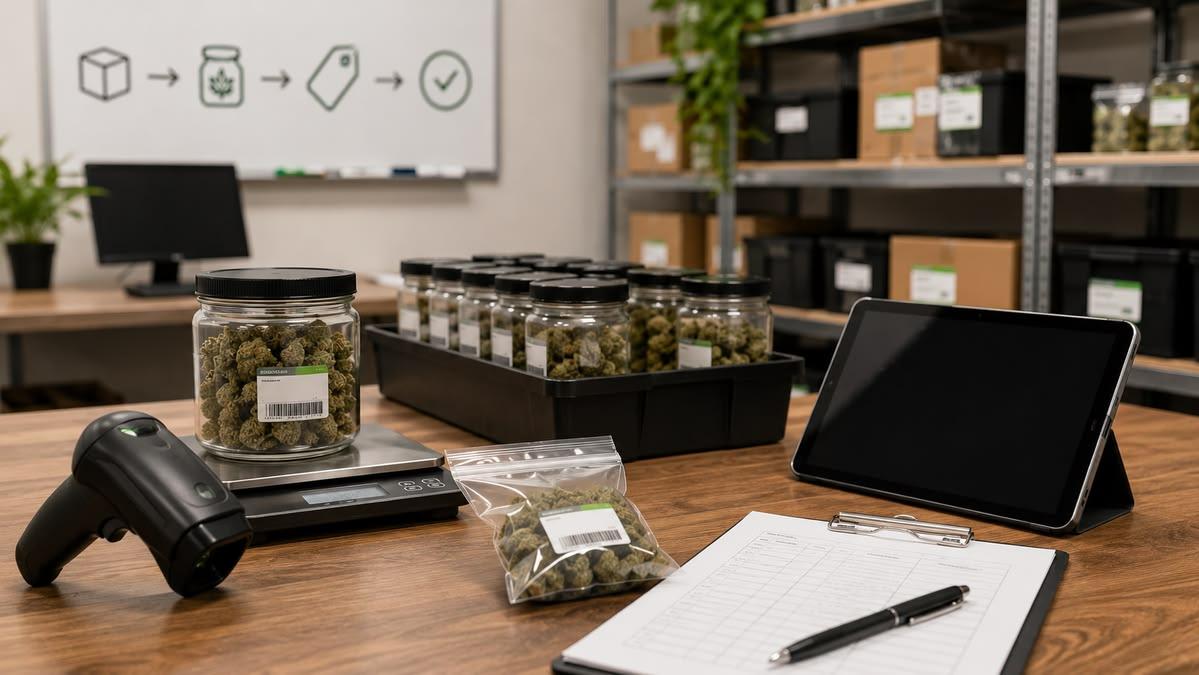
Cannabis inventory accuracy starts before the first sale. From receiving packages and attaching lab certificates to tracking split and combine workflows, disciplined inventory management is the foundation of compliance, profitability, and operational confidence.
This guide covers the practical best practices every dispensary team should follow for:
- intake and lab certificate verification,
- package tagging and clean data entry,
- split/combine workflows with clear reason codes,
- cycle counts, audits, and reconciliation,
- marijuana inventory systems that keep METRC and register records aligned.
Start with a strong intake checklist
The moment a shipment arrives is the most important inventory control point. A disciplined intake checklist prevents mistakes from propagating through the rest of the supply chain.
At intake, verify:
- the package tag matches the manifest,
- the product description matches the delivered item,
- the quantity, weight, and package condition are correct,
- the lab certificate is attached and available for review,
- the package is entered into your inventory system immediately.
A reliable intake process also includes a second check. Have one team member receive the shipment and another verify the tags, weights, and certificates. That reduces the chance of a bad tag, wrong quantity, or missing lab report being accepted into inventory.
Package tagging and data entry best practices
Cannabis is a package-based business. The strongest inventory systems track every item by package tag, not just SKU or product name.
Best practices for package tagging and data entry:
- scan package tags whenever possible instead of typing them,
- capture all required metadata: strain, batch, weight, THC percentage, and lab batch,
- avoid free-form notes as the primary record; use structured fields,
- standardize how package status is recorded (received, on hold, available, sold),
- attach lab certificates to the package record in the system.
If a package tag is wrong or missing, stop and resolve it before the item enters the sales inventory. That is the moment to fix it, not during reconciliation.
Manage split and combine workflows with reason codes
Splitting and combining packages are normal in dispensary operations, but they introduce risk if they are not documented clearly.
Use reason codes or workflow tags to make every adjustment auditable. For example:
- split package: create a new child package with the original tag and document the split reason,
- combine packages: record which package tags were merged and why,
- waste or destruction: attach a compliance-approved reason code and supporting documentation,
- product transfer: document transfers between locations or rooms.
A controlled split/combine workflow should always preserve the package lineage. Your inventory system should show the parent package, the resulting child packages, and the reason each adjustment was made.
Keep cycle counts consistent and frequent
Daily cycle counts are the most effective way to catch issues before they become audit problems.
A strong cycle count routine includes:
- count the highest-risk products first (flower, concentrates, high-value extracts),
- verify package tags, quantities, and status,
- reconcile counts to the inventory system immediately,
- investigate discrepancies right away,
- adjust the system only after a manager review.
When teams count the same items regularly, discrepancies become patterns instead of surprises. That makes it easier to identify whether the issue is a receiving error, a bad adjustment, or a process gap.
Reconciliation is more than a periodic task
Reconciliation should be built into daily operations, not left for the end of the month.
Best reconciliation practices include:
- compare POS inventory to back-office package records,
- verify METRC tag status against your inventory system,
- reconcile any untagged or suspicious packages immediately,
- document reasons for every adjustment,
- keep a clear audit trail for managers and compliance teams.
The more frequently you reconcile, the less time it takes. Weekly or shift-level reviews are better than quarterly audits because they keep the bookkeeping close to the physical inventory.
Use technology to keep METRC aligned
The most reliable cannabis inventory workflows connect package tracking to METRC and the register.
Look for systems that:
- upload package receipts and adjustments automatically,
- track METRC tag status in real time,
- prevent out-of-balance transfers,
- surface exceptions when the state record does not match your inventory,
- provide audit reports that show package lineage and state reconciliation.
A POS or inventory system that keeps METRC aligned is not just a convenience. It is a compliance control.
The value of clean inventory data for operations
When your package records are accurate, every part of the business works better.
Clean inventory data enables:
- faster checkout because the register finds the right product and tag,
- better purchase order planning because on-hand quantities are reliable,
- easier recalls when lab or safety issues arise,
- more confidence during audits and inspections,
- reduced shrinkage from process errors instead of theft.
In a dispensary, the cost of a bad package record is not just the missing item. It is the extra time spent researching, the risk of a compliance failure, and the lost trust in the inventory system.
Final checklist for cannabis inventory management
Use this practical checklist to keep your operations tight:
- verify package tags and lab certificates at intake,
- scan tags and use structured fields for every package,
- document splits, combines, and adjustments with reason codes,
- perform regular cycle counts and investigate discrepancies,
- reconcile POS inventory to package records and METRC,
- choose a system that supports inventory workflows and state reporting.
If your current inventory process still depends on handwritten notes, spreadsheets, or manual tag reconciliation, it is time to move to a more disciplined workflow.
For help building a package-level inventory process that matches your Oklahoma compliance needs, contact our team. A better system can reduce errors, speed intake, and keep your inventory aligned from receiving to sale.
Frequently asked questions
How often should inventory be reconciled?
Daily cycle counts or shift-level checks are recommended to catch issues early.
What intake checks are essential?
Verify package tags, attach lab certificates, and confirm quantities at intake before storing.
Book a Weed POS Demo
See how Weed POS handles OMMA compliance, inventory, and checkout for Oklahoma dispensaries, all in one operating system.
Related articles
OperationsJuly 15, 2026
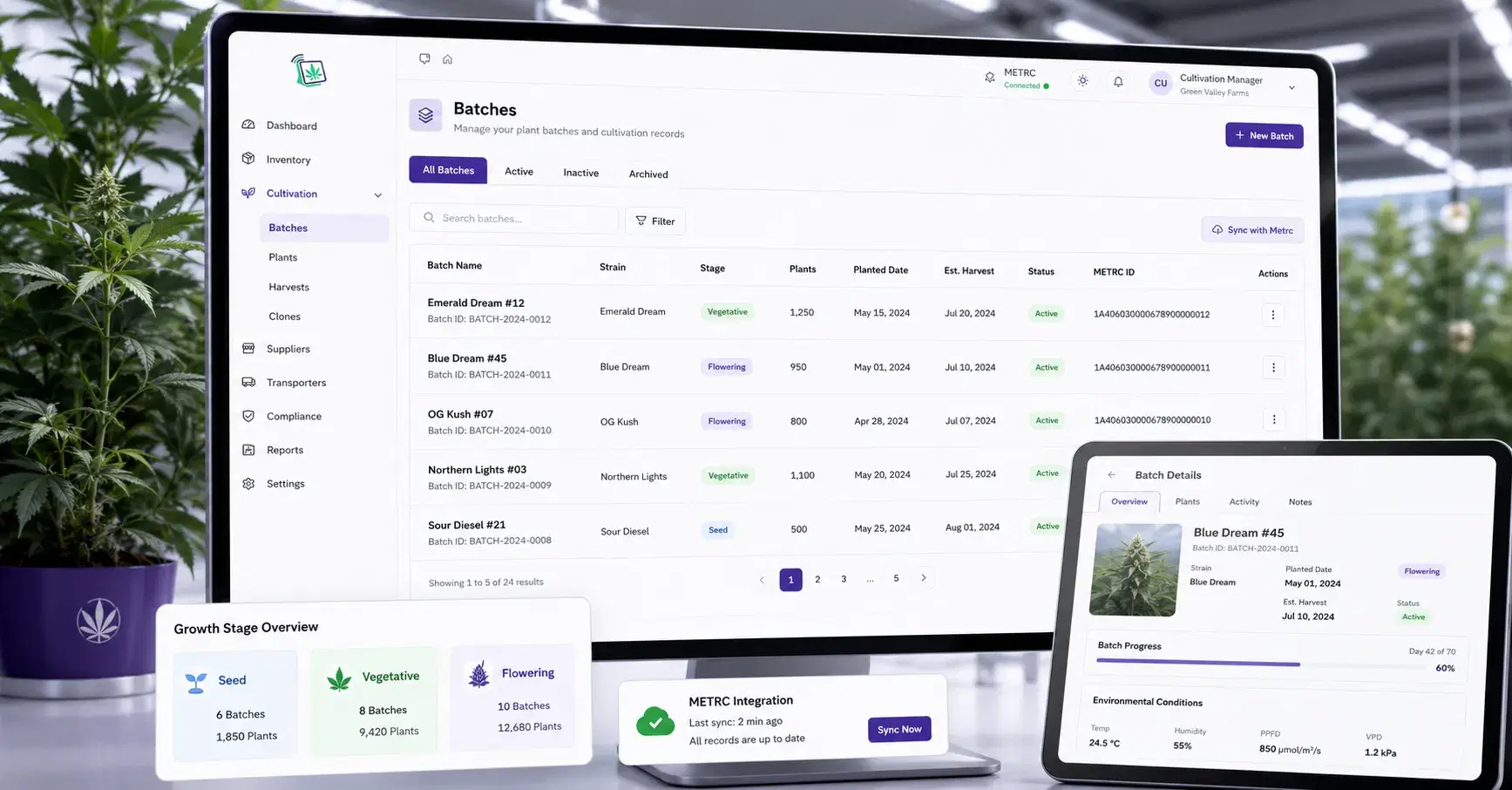
Batch Management for Cannabis Growers: Simplify Every Growth Stage with Weed POS
Track seed and clone batches, growth phases, plant counts, and METRC sync in one Weed POS Batch Management dashboard built for cannabis cultivators.
OperationsJune 24, 2026
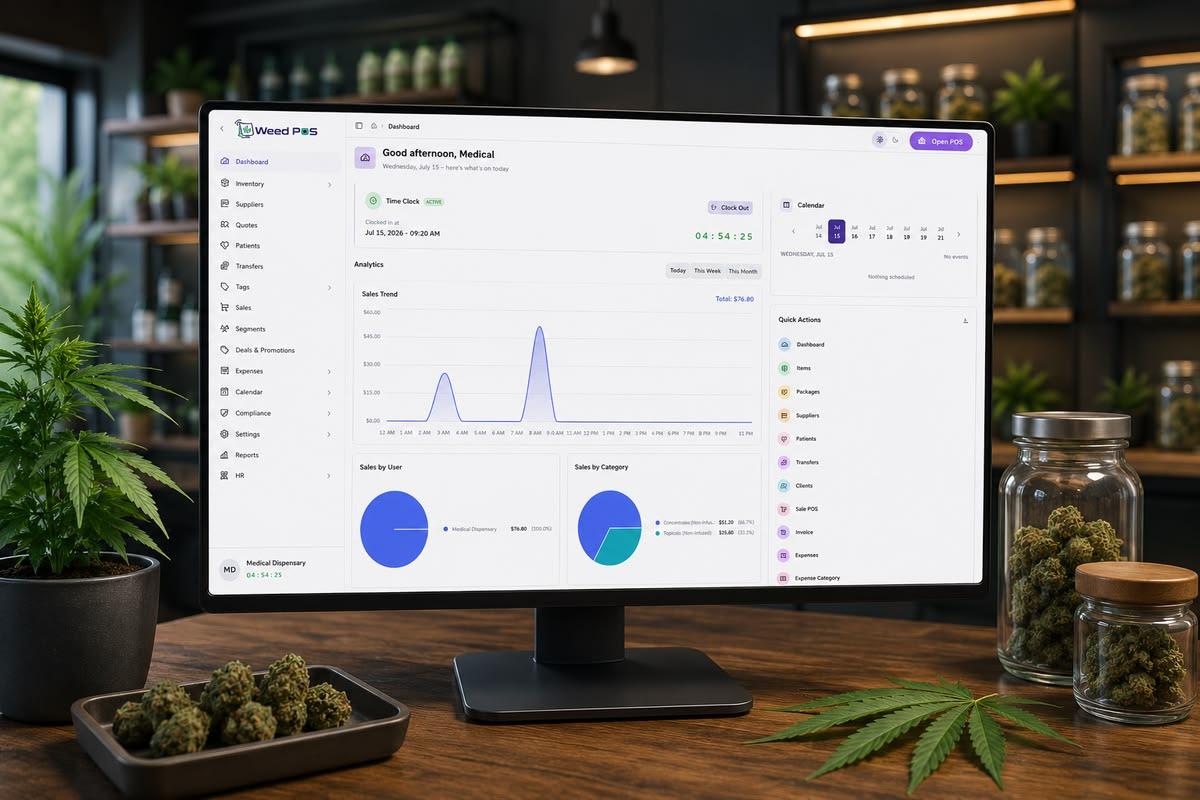
Common Challenges Facing Oklahoma Cannabis Retailers
Oklahoma cannabis retailers face METRC pressure, patient compliance, inventory shrink, and fierce competition — here are the operational challenges and how the right POS addresses them.
OperationsJune 20, 2026
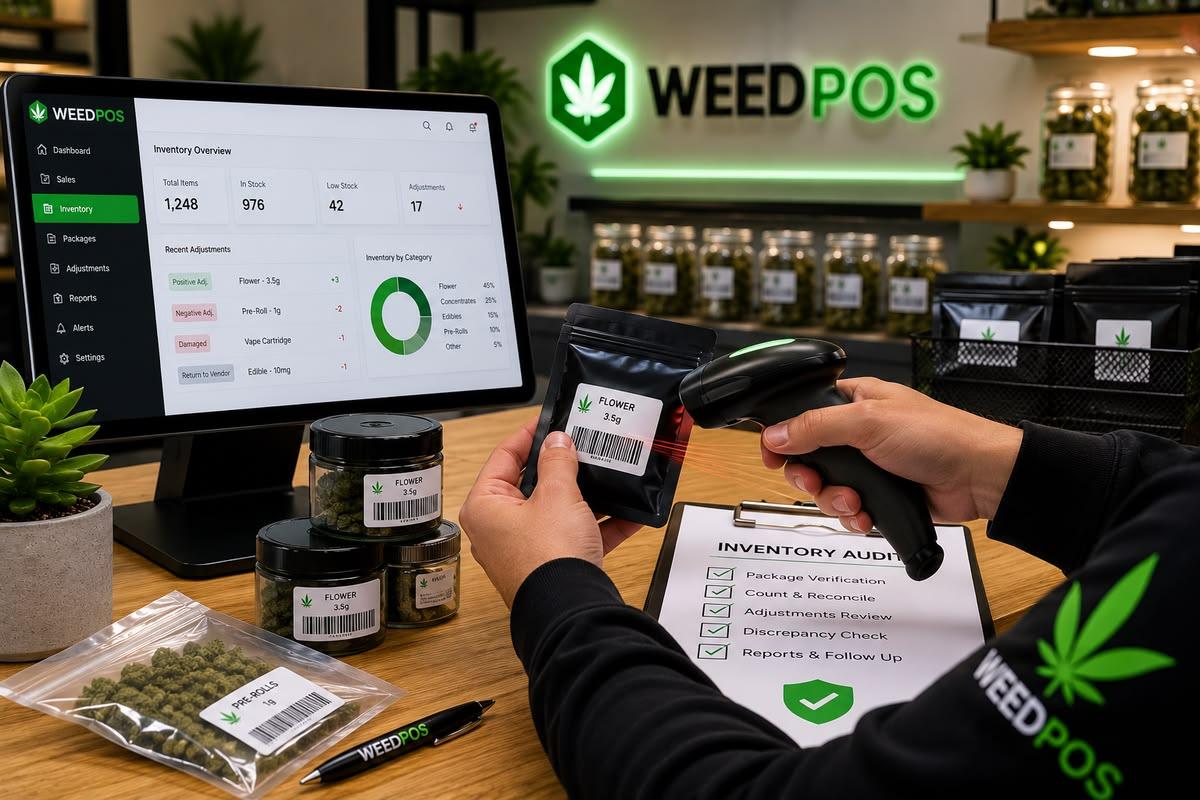
How to Reduce Inventory Loss in Cannabis Retail
Practical steps to reduce shrink, loss, and untracked adjustments in cannabis retail.